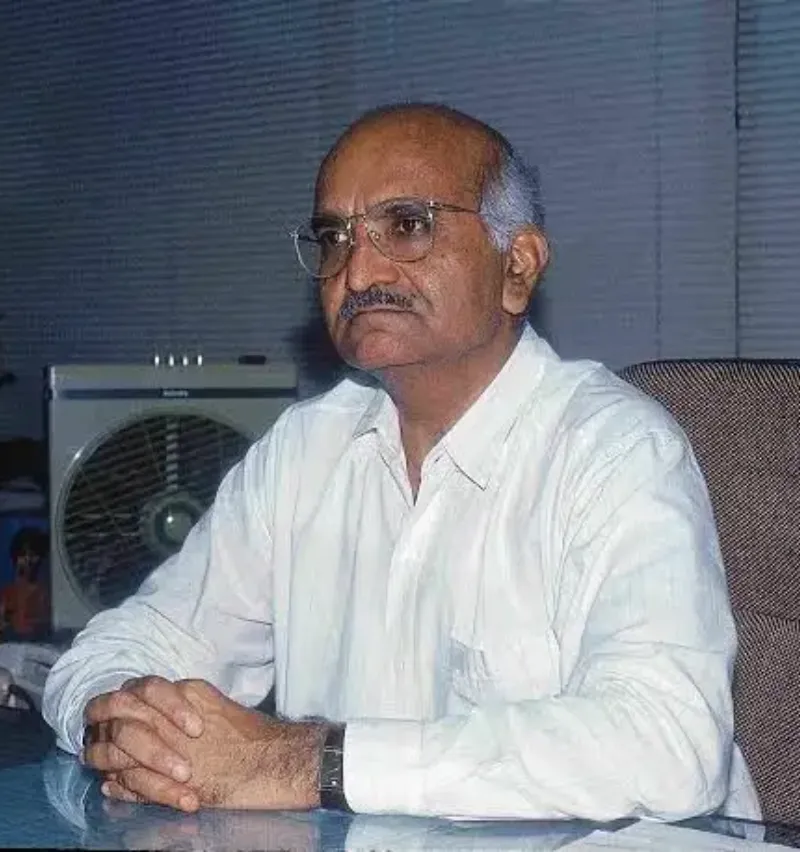
Karsanbhai Patel is the top brass behind the name of Nirma. An indian detergent brand that became popular over time. He is counted among the top Indian entrepreneurs in 2026. Karsanbhai was professionally a lab technician who established his own detergent brand in 1969. He gave the name of this brand, ‘Nirma’, after the name of his daughter. Since then, to now, he has led the indian market with quality and affordable products. His dedication and determination made him cross 4.9 billion dollars in 2021. Patel is not limited to who founded Nirma, but also, who extended their horizon to education. In his daughter’s name, he established ‘Nirma University,’ which is a private institute which is located in Ahmedabad.
Karsanbhai was born on 19 March 1945 in a small village called Ruppur, which is located in Patan. It is a district in north Gujarat. In the initial days, his family depended on farming for a living since they belonged to a farming background. Their life was simple, and the source of money was limited. At some stage, they struggle due to financial crisis and other reasons, but they overcome all the obstacles. When Karsanbhai was young, he learned that the value of hard work, equanimity, determination, passion, and goal can give him what he lacks the most in life. This kind of initial understanding helped him in the future.
Karsanbhai Patel Age
Karsanbhai Patel age is 80 years old. He is going to celebrate his 81st birthday on 19th March in 2026. Unlike other capitalist, he likes to celebrate this special day with his wife and children.
Karsanbhai Patel Education
Patel went to Gujarat University to fulfill his bachelor’s degree in Chemistry. There, he completed a B.Sc. in Chemistry in 1966.
Karsanbhai Patel Career
Karsanbhai started his business journey in a very simple way. In 1969, he began making detergent powder at home. He packed it himself and sold it by riding a bicycle from house to house. His product was affordable and worked well, which made people trust it.
He named the detergent Nirma after his daughter, who passed away at a young age. Slowly, the brand became popular. With growing demand, he opened factories and expanded production. Over time, Karsanbhai Patel Nirma brand became one of the most trusted names in Indian households.
Karsanbhai Patel Challenges
The early years were not easy. Big companies already controlled the detergent market. Many people doubted whether a small brand could survive. But Patel stayed strong. He focused on good quality and low price. His belief and effort helped him overcome all challenges.
Karsanbhai Patel Family
Patel comes from a middle-class family. He leans towards keeping his personal life restricted. His daughter’s death profoundly stricken him, and he honored her memory through his brand. Karsanbhai Patel family contemplates his strong emotional roots and values.
Karsanbhai Patel Investments
Over the years, Patel invested in many industries. His investments come mainly in the growth of his own brands, such as chemicals, cements, cosmetics, etc. Moreover, he showed interest in building the roots of India’s education department by establishing Nirma University. He even invested in establishing new companies in his daughter’s name. All the companies/educational institutions and any other areas where he invested are mentioned in the table below:
Companies / Educational Institutions / Others
Information
Nirma Consumer Care Limited
Provides Consumer Care Services
Nirma Limited
Now renamed as Nuvoco Vistas Corporation Limited, and the main base of the company
Nirma Cement Limited
Lafarge India’s Cement in 2016Emami Cement bought in 2020
Nirma Chemical Works Limited
Provide different chemical products like Soda Ash and Linear Alkyl Benzene (LAB)
The Government of India applauded him with the Padma Shri Award in 2010. He also obtained the Udyog Ratna Award, which portrays his growth from a small-scale business to one of a large-scale business.
Year
Awards and Achievements
Details
1990
Udyog Ratna Award
Received from the Federation of Associations of Small Scale Industries of India (FASII)
2001
Honorary Doctorate
Honored by Florida Atlantic University for entrepreneurial accomplishments
2010
Padma Shri Award
Received award from the President of India
2019
India’s Richest Person
Forbes ranked him number 30 in this category
–
Nirma
One of the top-selling detergents in India
–
Outstanding Industrialist of the Eighties
Honored by Gujarat Chamber of Commerce
–
Chairman of the Development Council for Oils, Soaps, and Detergents
He served two times on this position
Karsanbhai Patel Net Worth
Karsanbhai Patel net worth is estimated to be around $3.7 billion. This wealth comes from his soap and detergent brands and companies, university, investments, brand collaborations, and ventures. Below is the latest and updated information regarding his wealth is shared in tabular form:
Even in 2026, Patel does not wish to use social media. He only wishes to keep himself away from the glare of publicity of the internet world. Since he is in his 80s, he prefers to live an ordinary life and provide affordable products as much as possible.
Karsanbhai Patel Interesting Facts
He prefers vegetarian food items.
He sold detergent by bicycle in the early days
The name Nirma is a commendation to his daughter
He bought a six-seater chopper in 2013.
FAQs
Q1. Who are Karsanbhai Patel children?
Ans. His children are Rakesh K. Patel and Nirupama Patel.
Q2. Is Karsanbhai Patel Instagram account available?
Ans. His Instagram account is not available because he is not active on any social media platforms
StartupStoryHub is a fast-growing digital platform dedicated to bringing the latest updates from the world of startups, innovation, technology, and business. Our mission is to empower entrepreneurs and readers with accurate, inspiring, and insightful stories that shape the future of entrepreneurship. Stay connected for daily startup news, funding stories, and trend analyses from across the globe.
🌐 Visit StartupStoryHub.com
| 🚀 Your daily dose of startup inspiration!
In a nation where no one dared speak about menstruation, let alone challenge the taboo, a single woman set out to redefine how young girls learn about their bodies. Founder of Menstrupedia, Aditi Gupta is a global social entrepreneur, illustrator, researcher, and leader in menstrual education. Her transformation from enduring menstrual stigma in her childhood, which impelled […]
Not many can match the high-flying success story of Varun Alagh in the buzzing world of Indian startups and Fast-moving Consumer Goods (FMCG). From starting small in the corporate world to establishing a billion-dollar brand centred around clean, toxin-free personal care products, Alagh’s story is one of vision, resilience and purpose. As the co-founder and CEO […]
When we mention modern shopping in India one name stands and that name is Kishore Biyani. He transformed the way Indians purchase items: He transformed small shops into large stores where families would visit buying food, clothes, and their necessities. He is a recognized man and he is the founder of Future Group, a large […]
Startup India
The entrepreneurial scenario in India has changed over the last decade. The Indian government is supporting innovation through its Startup India initiative, creating employment opportunities and accelerating economic growth. In this blog, let's discuss Startup India, including its objectives, benefits, and eligibility criteria; also, know how to get a startup registered under this initiative.
What is Startups ?
A startup is the early stage of a company that is formed to develop a unique product or service, introduce it into the market, and scale it to make substantial revenues. Startups are an important part of innovation, job creation, and diversification in the economy. In India, startups play a critical role in driving technology adoption and solving complex challenges in areas such as healthcare, education, and financial inclusion.
Characteristics of a Startup
Innovation: Key concentration in developing new products, services, or processes.
Scalability: Ability to grow rapidly with low incremental costs.
Disruption: Challenge traditional business models or industries.
Importance of Startups in India
Job Creation: Startups are significant employment generators.
Economic Growth: Contribute to GDP by introducing new industries.
Technological Advancement: Drive innovation and technology adoption.
What is the Startup India Initiative?
Startup India is one of the flagship initiatives of the Government of India, launched on January 16, 2016. It aims to build a robust ecosystem that nurtures innovation and startups across the country. The idea is to give an impetus to economic growth and employment generation in a substantial way. Startup India seeks to encourage entrepreneurship by giving a boost to innovation and design, thus leading to the growth and success of the startup ecosystem.
Standup India Scheme Standup India scheme was announced on April 5, 2016, to finance new enterprises, to boost the entrepreneurship culture in India. The program ensures the availability of loans through the Scheduled Commercial Banks (SCBs), between ₹10 lakh and ₹1 crore to at least one member of the Scheduled Caste (SC) and Scheduled Tribe (ST), and at least one woman, per bank branch. The support in this new scheme is granted to businesses in the trading, services, or manufacturing sectors. This will supposedly help about 250,000 borrowers.
Key Objectives of Startup India
Making Business Easier: Simple rules, compliance, and legal steps.
Financial Help: Provide access to government funds and venture capital.
Building Skills: Offer training and mentorship programs.
Encouraging Innovation: Support research and development with grants.
Features of Startup India
Startup India Hub: This is a place where startups can connect with investors and mentors.
Fund of Funds for Startups (FFS): This is a ₹10,000 crore fund managed by the Small Industries Development Bank of India (SIDBI).
Tax Benefits: Eligible startups can get exemptions from income tax and capital gains tax.
Startup Recognition: Startups can receive official recognition from the Department for Promotion of Industry and Internal Trade (DPIIT).
The Startup India scheme eligibility criteria
If you want to get funding through the Start-up India scheme, you need to meet certain eligibility requirements. Knowing these requirements well will help you successfully go through the application process.
Business Experience: Start-ups applying for this scheme must have been operating for more than five years.
Age Requirement: Applicants must be at least 18 years old.
Company Structure: To get funds under this scheme, the company must be either a partnership or a private limited company.
Turnover Limit: The company should have an annual turnover of no more than Rs. 25 crore.
No Reconstruction: Start-ups that have emerged from the splitting or restructuring of an existing business are not eligible for this scheme. Companies that have divided an organization into two or more parts will be disqualified.
If a company is developing a new product or service, it can benefit from the Start-up India policy.
Here are the requirements:
The start-up must create, utilize, or sell a product or service that is based on new technology or intellectual property.
The focus should be on enhancing an existing product or developing a new one that adds value for customers or improves workflow.
The start-up must not engage in projects that are not unique or do not provide value to customers or enhance workflow.
To get a Startup India loan, start-ups must secure various approvals and submit specific documents:
Obtain approval from the Inter-Ministerial Board under the Department of Industrial Policy and Promotion (DIPP).
Acquire a recommendation from an incubator affiliated with a recognized post-graduate college.
Secure a recommendation from a government-recognized incubator.
File a patent for your product or service and have it published in the Indian Patent Office Journals.
If your services involve funding and equity, register with the Securities and Exchange Board of India (SEBI).
Provide a funding letter from any state or central government scheme that supports innovation.
How to Register Under Startup Under Startup India Scheme?
Step 1: Start Your Business
The first step in starting your business is to choose a legal structure, such as a Private Limited Company, Partnership, or Limited Liability Partnership (LLP). You will need to complete the standard registration process, which involves submitting an application and obtaining a Certificate of Incorporation or Partnership registration.
Step 2: Register with Startup India
Once you have created your business, the next step is to register it as a startup. This process is straightforward and can be completed online. First, visit the Startup India website and click the 'Register' button. Enter your name, email address, and mobile number, then create a password and click 'Register.' You will receive a One-Time Password (OTP) in your email. Enter this OTP and provide additional information, such as your user type, business name, and the stage of your startup. Finally, click 'Submit' to create your Startup India profile. Completing this registration will help your business be recognized as a startup under the Startup India scheme, granting you access to various benefits and support.
Step 3: Obtain DPIIT Recognition
After creating your profile on the Startup India website, the next step is obtaining recognition from the Department for Promotion of Industry and Internal Trade (DPIIT). This recognition provides benefits such as quality intellectual property services, relaxed public procurement rules, self-certification for labour and environmental laws, simplified winding-up procedures, access to the Fund of Funds, and tax exemptions for three years.
Step 4: Submit the Documents for Registration
To complete the registration process and obtain DPIIT recognition for your startup, please submit the following documents:
1. The incorporation or registration certificate of your startup.
2. Proof of funding, if applicable.
3. An authorization letter from the company's authorized representative
4. Evidence of your concept, such as a website link, pitch deck, or video (this applies to startups at the validation, early traction, or scaling stage).
5. Information regarding any patents and trademarks you hold.
6. A list of any awards or certificates of recognition you have received.
7. Your Permanent Account Number (PAN).
Step 5: Self-Certification of Eligibility Conditions
You need to confirm that your business meets the following conditions:
1. Your business must be a Private Limited Company, Limited Liability Partnership (LLP), or partnership firm.
2. Your business has been registered in India for no more than five years.
3. Your company's turnover does not exceed ₹100 crore.
4. Your company is consistently innovating or improving existing systems.
5. Your business is based on an original idea, rather than a split or reorganization of an existing business.
Step 6: Obtain Your Recognition Number
When applying for registration, you will receive your recognition number immediately. The authority will send you the certificate of registration or incorporation after reviewing your uploaded documents. Ensure that you upload accurate information to avoid errors, as mistakes can lead to fines of up to 50% of your paid-up capital or a minimum of Rs. 25,000. By fulfilling the eligibility and registration requirements, your company can participate in the Startup India scheme and enjoy various benefits provided by the government.
Wrapping Up
The Startup India initiative has revolutionized the entrepreneurial landscape in India by offering financial, regulatory, and infrastructural support. If you’re an entrepreneur with an innovative idea, registering under this program can unlock numerous opportunities for growth and success. Begin your startup journey today and contribute to India’s transformation into a global hub for innovation.
FAQ’s
Q1. What is the aim of the Startup India initiative?
Ans: Startup India aims to promote entrepreneurship, support innovation, and create a robust startup ecosystem in India.
Q2. How long does it take to register under Startup India?
Ans: The registration process typically takes 2–3 weeks, depending on document verification.
Q3. Are there any fees for registering under Startup India?
Ans: No, the registration process under the Startup India initiative is free of cost.
Q4. Can a sole proprietorship register under Startup India?
Ans: No, only Private Limited Companies, LLPs, and Partnership Firms are eligible to register.
Q5. What are the tax benefits available to startups?
Ans: Startups can avail of income tax exemptions for three consecutive years and exemptions on long-term capital gains.
Q6. Is the Startup India initiative open to foreign startups?
Ans: No, the initiative is exclusively for startups registered and operating in India.