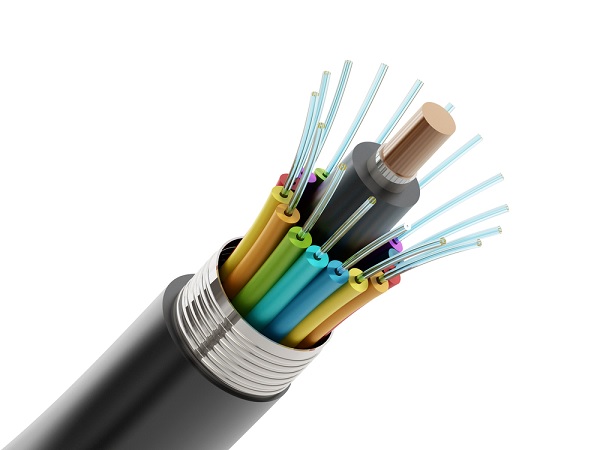
Consistent connection has been critical to communication, education, business, and entertainment. Powerful internet performance is another crucial condition of many households and organisations that are able to run their day-to-day activities effectively. Conventional network systems are not always able to support increased data needs, leading to low speed or unreliable connections. The high-speed fiber optic technology provides a reliable solution in the form of light-based transmission with the ability to promote faster communication and greater reliability.
Connection expectations are ever rising, with an increasing number of devices becoming connected at the same time. Homes need a fixed access to education, streaming, and remote collaboration, whereas businesses can rely on constant communication in order to be productive. These needs can be met by pure fiber optic networks that can be predictable in terms of speed, maintain a balanced rate in data movement, and offer a high level of reliability. The knowledge on this technology aids the users to make informed choices regarding future-ready connectivity.
What are the Foundational Principles of Fiber Optic Technology?
The first step towards a reliable network infrastructure is having good fiber optic systems that are planned to operate reliably. There have been numerous talks concerning connectivity solutions, citing fibre internet as an example of high-capacity communication technology that enables the quick transmission of data.
Fiber optic cables enable the transmission of information using light signals, and therefore, there is fast communication that is experienced at a low level of interference. The technology can be used to maintain steady connections to both residential and commercial applications. Proper infrastructure also provides a reliable service even in times of peak network utilization.
What are the Primary Speed Benefits of Fiber Connectivity?
Fiber connectivity with high capacity gives significant gains in efficiency in communication. These benefits favour productivity, learning, and the smooth flow of information.
Key Efficiency Gains
Enhanced Collaboration: Faster communication improves effectiveness in online learning and remote work.
Symmetrical Uploading: Enables seamless sharing of bulk multimedia and large work files.
Buffering Reduction: Consistent signal strength ensures smooth streaming and virtual conversations.
Multi-Device Support: Predictable performance allows numerous devices to operate without slowing the connection.
Reliable Signal Relaying: Ensures certain access for both residential and organizational setups.
How Light-Based Transmission Ensures Network Reliability
Fiber optic networks are also reliable in terms of performance, since transmission using light lowers electrical interference. This guarantees reliability in connectivity even at times of heavy usage. Companies are gaining less downtime, and households have constant communication. Trustworthy interconnections promote workability, distance education, and leisure facilities. The infrastructure is also strong and thus reduces maintenance needs, and this is essential in maintaining long-term stability.
What Installation Insights Optimize Fiber Optic Performance?
Adequate installation is key to the realization of the best fiber optic results. Learning about installation considerations will assist the users in getting the best out of it.
Professional Cable Placement: Guarantees signal stability and eliminates future disconnections.
Quality In-House Wiring: Ensures uniform performance across all connected devices.
Hardware Compatibility: Using compatible routers and equipment increases system efficiency.
Proactive Monitoring: Periodical checks help maintain performance and avoid unforeseen outages.
Transparent Service Agreements: Clarifies maintenance duties and technical support availability.
Improving Home Connectivity for Learning and Entertainment
The use of fiber optic networks is very effective in enhancing communication at home. Strong connectivity facilitates learning systems, communication systems, and access to entertainment systems without failures. Families have the advantage of having constant speeds, no matter how many devices are connected at a given time. Quality service minimizes the frustrations that come as a result of buffering or connection failure. Improved network quality also favors smart home technologies and advanced systems of communication.
Frequently Asked Questions About Fiber Optic Internet
Before installing fiber optic connectivity, many people want to find out more clarity. The questions given below cover general concerns.
Why are fiber optic networks faster than traditional networks?
Transmission through light provides fast transmission of data with less interference.
Is a fiber optic connection applicable to homes and businesses?
Yes, it helps both in residential communication and organisational productivity.
Does fiber optic internet need special equipment?
Cables and routers are specific and compatible with each other in order to enhance their functionality and reliability.
Is it possible to connect more than one device to the network using fiber?
Yes, high bandwidth capacity proves to be able to support multiple devices without reducing the speed.
Boosting Business Efficiency With Pure Fiber Networks
The use of pure fiber networks in organisations is very beneficial since there is stable communication. Video communication, cloud services, and performance in data transfer are facilitated by high-speed connectivity. Decreased latency enhances cooperation between team members. Stable performance improves the level of operations and quality of interaction with the customers. Good internet connectivity also sustains innovation and business development.
Ensuring Future Scalability for Growing Data Needs
Fiber optic networks equip their users with rising connectivity requirements. With the advancement in technology, the consumption of data is increasing at a steady pace. The fiber infrastructure can be upgraded in the future without significant upgrades. This flexibility guarantees long-term investment in both residential and commercial. Scalable connectivity investments eliminate the necessity of changing infrastructure frequently.
Choosing Smart Connectivity for Long-Term Value
The selection of high-speed fiber infrastructure is conducive to the quality of communication and efficiency of the work. Powerful network performance promotes learning, work, teamwork, and entertainment at the same time.
Understanding the installation practices, reliability, and scalability advantages assists users in choosing the appropriate connectivity solutions. There are numerous debates with the focus on the use of fibre internet as a reliable tool to use in the modern world of communication. Proper planning and decision-making can enable households and organisations to have stable connectivity as they anticipate technological advancement in the future.
India’s solar energy sector is gaining momentum in a bid to achieve the country’s target of attaining 50 percent renewable sources for energy by 2030. With $3.2 billion in government incentives fueling its push, the country is set to become the second-largest solar manufacturer in the world by 2026. Although top solar companies have to […]
In our busy online world, many people visit blogs and websites to read about trending topics, learn something new, or just catch up with last night’s buzz. One site that has gained attention lately is itsnewztalkies com. You might have heeded the name online and wondered what it is and whether it’s trustworthy or useful. […]
Finding the right flooring is a significant decision, as the living room serves as the central hub for both relaxation and entertaining. While traditional materials have their merits, modern floor tile options offer durability and elegance that are difficult to match. From expansive large-format porcelain to the natural warmth of wood-effect finishes, the right selection […]
The entrepreneurial scenario in India has changed over the last decade. The Indian government is supporting innovation through its Startup India initiative, creating employment opportunities and accelerating economic growth. In this blog, let's discuss Startup India, including its objectives, benefits, and eligibility criteria; also, know how to get a startup registered under this initiative.
What is Startups ?
A startup is the early stage of a company that is formed to develop a unique product or service, introduce it into the market, and scale it to make substantial revenues. Startups are an important part of innovation, job creation, and diversification in the economy. In India, startups play a critical role in driving technology adoption and solving complex challenges in areas such as healthcare, education, and financial inclusion.
Characteristics of a Startup
Innovation: Key concentration in developing new products, services, or processes.
Scalability: Ability to grow rapidly with low incremental costs.
Disruption: Challenge traditional business models or industries.
Importance of Startups in India
Job Creation: Startups are significant employment generators.
Economic Growth: Contribute to GDP by introducing new industries.
Technological Advancement: Drive innovation and technology adoption.
What is the Startup India Initiative?
Startup India is one of the flagship initiatives of the Government of India, launched on January 16, 2016. It aims to build a robust ecosystem that nurtures innovation and startups across the country. The idea is to give an impetus to economic growth and employment generation in a substantial way. Startup India seeks to encourage entrepreneurship by giving a boost to innovation and design, thus leading to the growth and success of the startup ecosystem.
Standup India Scheme Standup India scheme was announced on April 5, 2016, to finance new enterprises, to boost the entrepreneurship culture in India. The program ensures the availability of loans through the Scheduled Commercial Banks (SCBs), between ₹10 lakh and ₹1 crore to at least one member of the Scheduled Caste (SC) and Scheduled Tribe (ST), and at least one woman, per bank branch. The support in this new scheme is granted to businesses in the trading, services, or manufacturing sectors. This will supposedly help about 250,000 borrowers.
Key Objectives of Startup India
Making Business Easier: Simple rules, compliance, and legal steps.
Financial Help: Provide access to government funds and venture capital.
Building Skills: Offer training and mentorship programs.
Encouraging Innovation: Support research and development with grants.
Features of Startup India
Startup India Hub: This is a place where startups can connect with investors and mentors.
Fund of Funds for Startups (FFS): This is a ₹10,000 crore fund managed by the Small Industries Development Bank of India (SIDBI).
Tax Benefits: Eligible startups can get exemptions from income tax and capital gains tax.
Startup Recognition: Startups can receive official recognition from the Department for Promotion of Industry and Internal Trade (DPIIT).
The Startup India scheme eligibility criteria
If you want to get funding through the Start-up India scheme, you need to meet certain eligibility requirements. Knowing these requirements well will help you successfully go through the application process.
Business Experience: Start-ups applying for this scheme must have been operating for more than five years.
Age Requirement: Applicants must be at least 18 years old.
Company Structure: To get funds under this scheme, the company must be either a partnership or a private limited company.
Turnover Limit: The company should have an annual turnover of no more than Rs. 25 crore.
No Reconstruction: Start-ups that have emerged from the splitting or restructuring of an existing business are not eligible for this scheme. Companies that have divided an organization into two or more parts will be disqualified.
If a company is developing a new product or service, it can benefit from the Start-up India policy.
Here are the requirements:
The start-up must create, utilize, or sell a product or service that is based on new technology or intellectual property.
The focus should be on enhancing an existing product or developing a new one that adds value for customers or improves workflow.
The start-up must not engage in projects that are not unique or do not provide value to customers or enhance workflow.
To get a Startup India loan, start-ups must secure various approvals and submit specific documents:
Obtain approval from the Inter-Ministerial Board under the Department of Industrial Policy and Promotion (DIPP).
Acquire a recommendation from an incubator affiliated with a recognized post-graduate college.
Secure a recommendation from a government-recognized incubator.
File a patent for your product or service and have it published in the Indian Patent Office Journals.
If your services involve funding and equity, register with the Securities and Exchange Board of India (SEBI).
Provide a funding letter from any state or central government scheme that supports innovation.
How to Register Under Startup Under Startup India Scheme?
Step 1: Start Your Business
The first step in starting your business is to choose a legal structure, such as a Private Limited Company, Partnership, or Limited Liability Partnership (LLP). You will need to complete the standard registration process, which involves submitting an application and obtaining a Certificate of Incorporation or Partnership registration.
Step 2: Register with Startup India
Once you have created your business, the next step is to register it as a startup. This process is straightforward and can be completed online. First, visit the Startup India website and click the 'Register' button. Enter your name, email address, and mobile number, then create a password and click 'Register.' You will receive a One-Time Password (OTP) in your email. Enter this OTP and provide additional information, such as your user type, business name, and the stage of your startup. Finally, click 'Submit' to create your Startup India profile. Completing this registration will help your business be recognized as a startup under the Startup India scheme, granting you access to various benefits and support.
Step 3: Obtain DPIIT Recognition
After creating your profile on the Startup India website, the next step is obtaining recognition from the Department for Promotion of Industry and Internal Trade (DPIIT). This recognition provides benefits such as quality intellectual property services, relaxed public procurement rules, self-certification for labour and environmental laws, simplified winding-up procedures, access to the Fund of Funds, and tax exemptions for three years.
Step 4: Submit the Documents for Registration
To complete the registration process and obtain DPIIT recognition for your startup, please submit the following documents:
1. The incorporation or registration certificate of your startup.
2. Proof of funding, if applicable.
3. An authorization letter from the company's authorized representative
4. Evidence of your concept, such as a website link, pitch deck, or video (this applies to startups at the validation, early traction, or scaling stage).
5. Information regarding any patents and trademarks you hold.
6. A list of any awards or certificates of recognition you have received.
7. Your Permanent Account Number (PAN).
Step 5: Self-Certification of Eligibility Conditions
You need to confirm that your business meets the following conditions:
1. Your business must be a Private Limited Company, Limited Liability Partnership (LLP), or partnership firm.
2. Your business has been registered in India for no more than five years.
3. Your company's turnover does not exceed ₹100 crore.
4. Your company is consistently innovating or improving existing systems.
5. Your business is based on an original idea, rather than a split or reorganization of an existing business.
Step 6: Obtain Your Recognition Number
When applying for registration, you will receive your recognition number immediately. The authority will send you the certificate of registration or incorporation after reviewing your uploaded documents. Ensure that you upload accurate information to avoid errors, as mistakes can lead to fines of up to 50% of your paid-up capital or a minimum of Rs. 25,000. By fulfilling the eligibility and registration requirements, your company can participate in the Startup India scheme and enjoy various benefits provided by the government.
Wrapping Up
The Startup India initiative has revolutionized the entrepreneurial landscape in India by offering financial, regulatory, and infrastructural support. If you’re an entrepreneur with an innovative idea, registering under this program can unlock numerous opportunities for growth and success. Begin your startup journey today and contribute to India’s transformation into a global hub for innovation.
FAQ’s
Q1. What is the aim of the Startup India initiative?
Ans: Startup India aims to promote entrepreneurship, support innovation, and create a robust startup ecosystem in India.
Q2. How long does it take to register under Startup India?
Ans: The registration process typically takes 2–3 weeks, depending on document verification.
Q3. Are there any fees for registering under Startup India?
Ans: No, the registration process under the Startup India initiative is free of cost.
Q4. Can a sole proprietorship register under Startup India?
Ans: No, only Private Limited Companies, LLPs, and Partnership Firms are eligible to register.
Q5. What are the tax benefits available to startups?
Ans: Startups can avail of income tax exemptions for three consecutive years and exemptions on long-term capital gains.
Q6. Is the Startup India initiative open to foreign startups?
Ans: No, the initiative is exclusively for startups registered and operating in India.