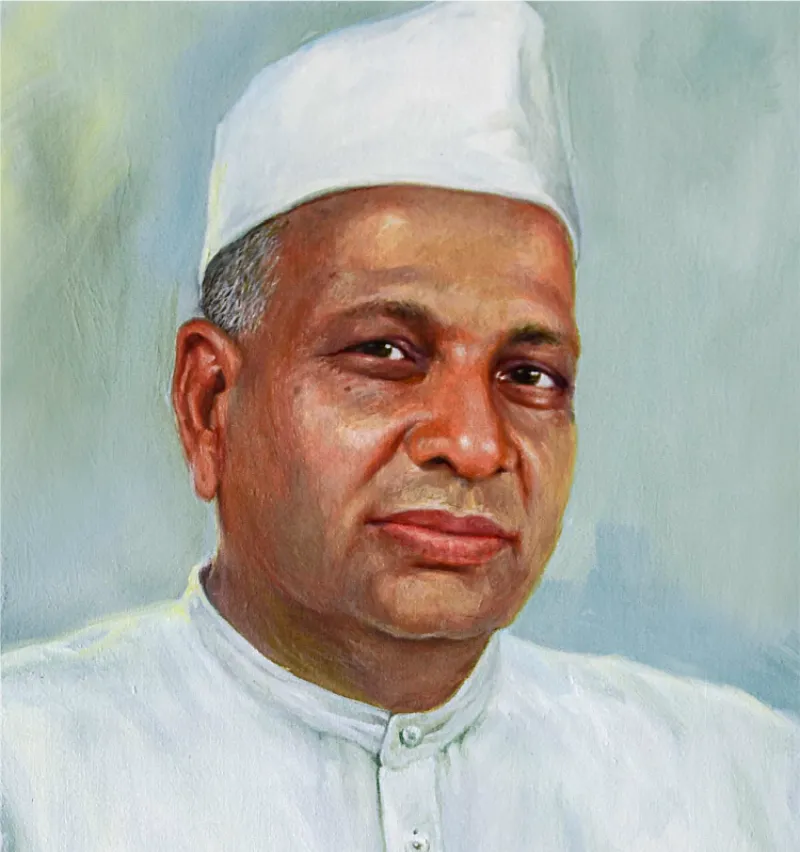
Jamnalal Bajaj is the main person who built the name of the BAJAJ industry. He is not only known for his philanthropic work but also for his contribution as a freedom fighter. The biggest achievement of his life is the good relationship with Mahatma Gandhi. According to the official source, he was accepted by Gandhi as his ‘5th son.’ Even though he was not originally his son but his work towards the Indian people made him accept him as his son. Except that, Bajaj had contributed ‘100 Rupees’ to Lokmanya Tilak’s Marathi Kesari newspaper at age 13. He even engaged in the Civil Disobedience Movement (1932) and was kept in the Dhulia Jail for his contribution.
Jamnalal Bajaj was born on 4 November 1889 in the holy city of Kashi Ka Bas (now Varanasi) in northern India. He died on 11 February 1942 in Wardha. His family belonged to the Maheshwari Bania (Vaishya). As a boy, Jamnalal developt in a place full of tradition and culture. His father, Kaniram, worked hard to give his family a staid life.
From a young age, Jamnalal was vivid and curious. He was close to his family and had good manners. In schools of that time, his learning was based on respect, honesty, and discipline. Even as a young boy, he showed portents of leadership and kindness.
Jamnalal Bajaj Age
Jamnalal Bajaj age was 52 years old before he died in 1942. Nevertheless he passed away long ago, his work and teachings still incline many people in India and the world.
Jamnalal Bajaj Education
Bajaj received his early schooling in Varanasi. Nevertheless he could not continue to pursue higher education. Somehow, he received basic knowledge about business from his adoptive father, Seth Bachhraj Bajaj. At a later date, he met Mahatma Gandhi, who energized him greatly. He began to attention more on service, truth, and working toward India’s freedom rather than practicing law.
Jamnalal’s career with helping his family’s firm to make it stronger and bigger. Thanks to his efforts, the business expanded in many areas like trade, manufacturing, and finance.
Jamnalal’s catchiest role was as a freedom fighter and helper. He met Mahatma Gandhi and became one of his closest supporters. Gandhi called him “the king of Indian youth” because of his courage, simplicity, and service.
He worked with farmers, workers, and students to spread the message of unity and peace. Jamnalal took part in many movements for freedom. He was arrested many times by the British rulers.
Jamnalal Bajaj Challenges
Life was not easy for Jamnalal. He faced criticism from people who did not understand his choice. Many thought giving up business and wealth was unwise. But Jamnalal was firm in his belief that serving his country was more important than earning money. While working for India’s freedom, he was arrested by the British more than once. He spent long periods in prison. Additionally, he worked to uplift farmers and villagers, but faced resistance from powerful landowners.
Jamnalal Bajaj Family
Jamnalal grew up in a loving household. He was a devoted son of Kaniram and Birdibai and a caring husband of Jankidevi Bajaj. His wife supported his ideals and work. His children are Kamalnayan Bajaj, Kamla Bajaj, Uma Bajaj, and Ramkrishna Bajaj. They grew up watching their father’s dedication, honesty, and love for service.
Jamnalal Bajaj Investments
Jamnalal investments were not limited to factories or trade but also included schools, hospitals, and community centers. One of his longest-term investments is the Jamnalal Bajaj Foundation, which continues his work of social service. This foundation provides awards in fields like rural development, science, art, and literature to incite people who work for the good of society.
Another important institution that carries his name is the Jamnalal Bajaj Institute of Management Studies. This institute is one of India’s top business schools. It trains young minds in leadership, management, and ethical business practices. The institute reflects Jamnalal’s belief in education and service. It continues his dream of empowering youth to build a better society.
Bajaj received many praises for his work toward India’s growth. In his lifetime, he was honored by other leaders and freedom fighters for his contributions. Unfortunately, he did not receive awards for his work. However, after his death, the Government of India recognized his lifelong service and named many awards and institutions after him. The Jamnalal Bajaj Foundation Awards are one of the most respected honors given to people who serve society in various fields.
Jamnalal Bajaj Net Worth
Unlike modern business leaders, Bajaj’s wealth was never measured in public records. He lived before modern net worth tracking existed.
Jamnalal Bajaj Social Media Presence
Jamnalal lived in the early 1900s, long before the internet existed. So he did not have social media profiles. But today, schools, colleges, and even the Jamnalal Bajaj Institute of Management Studies accord his story to inspire students.
Jamnalal Bajaj Interesting Facts
Jamnalal was a close friend and adherent of Mahatma Gandhi.
Gandhi admired him so much that he called him “the king of Indian youth.”
He worked to help farmers, workers, and students throughout India.
The Jamnalal Bajaj Institute of Management Studies was named to honor his belief in strong leadership and education.
The Jamnalal Bajaj Foundation gives awards each year to people who do masterwork for society.
FAQs
Q1. Who was Jamnalal Bajaj son?
Ans. Kamalnayan Bajaj (elder son) and Ramkrishna Bajaj (younger son).
StartupStoryHub is a fast-growing digital platform dedicated to bringing the latest updates from the world of startups, innovation, technology, and business. Our mission is to empower entrepreneurs and readers with accurate, inspiring, and insightful stories that shape the future of entrepreneurship. Stay connected for daily startup news, funding stories, and trend analyses from across the globe.
🌐 Visit StartupStoryHub.com
| 🚀 Your daily dose of startup inspiration!
In a nation where no one dared speak about menstruation, let alone challenge the taboo, a single woman set out to redefine how young girls learn about their bodies. Founder of Menstrupedia, Aditi Gupta is a global social entrepreneur, illustrator, researcher, and leader in menstrual education. Her transformation from enduring menstrual stigma in her childhood, which impelled […]
Not many can match the high-flying success story of Varun Alagh in the buzzing world of Indian startups and Fast-moving Consumer Goods (FMCG). From starting small in the corporate world to establishing a billion-dollar brand centred around clean, toxin-free personal care products, Alagh’s story is one of vision, resilience and purpose. As the co-founder and CEO (“Chief […]
One of the most notable Indian innovators and entrepreneurs of the early 20th century was Ardeshir Godrej. During a period when India was governed by the British and when Indian corporations could hardly expand, he developed some products that were contemporary, dependable, and full of Indian pride. Beginning with the failures as a child and […]
Startup India
The entrepreneurial scenario in India has changed over the last decade. The Indian government is supporting innovation through its Startup India initiative, creating employment opportunities and accelerating economic growth. In this blog, let's discuss Startup India, including its objectives, benefits, and eligibility criteria; also, know how to get a startup registered under this initiative.
What is Startups ?
A startup is the early stage of a company that is formed to develop a unique product or service, introduce it into the market, and scale it to make substantial revenues. Startups are an important part of innovation, job creation, and diversification in the economy. In India, startups play a critical role in driving technology adoption and solving complex challenges in areas such as healthcare, education, and financial inclusion.
Characteristics of a Startup
Innovation: Key concentration in developing new products, services, or processes.
Scalability: Ability to grow rapidly with low incremental costs.
Disruption: Challenge traditional business models or industries.
Importance of Startups in India
Job Creation: Startups are significant employment generators.
Economic Growth: Contribute to GDP by introducing new industries.
Technological Advancement: Drive innovation and technology adoption.
What is the Startup India Initiative?
Startup India is one of the flagship initiatives of the Government of India, launched on January 16, 2016. It aims to build a robust ecosystem that nurtures innovation and startups across the country. The idea is to give an impetus to economic growth and employment generation in a substantial way. Startup India seeks to encourage entrepreneurship by giving a boost to innovation and design, thus leading to the growth and success of the startup ecosystem.
Standup India Scheme Standup India scheme was announced on April 5, 2016, to finance new enterprises, to boost the entrepreneurship culture in India. The program ensures the availability of loans through the Scheduled Commercial Banks (SCBs), between ₹10 lakh and ₹1 crore to at least one member of the Scheduled Caste (SC) and Scheduled Tribe (ST), and at least one woman, per bank branch. The support in this new scheme is granted to businesses in the trading, services, or manufacturing sectors. This will supposedly help about 250,000 borrowers.
Key Objectives of Startup India
Making Business Easier: Simple rules, compliance, and legal steps.
Financial Help: Provide access to government funds and venture capital.
Building Skills: Offer training and mentorship programs.
Encouraging Innovation: Support research and development with grants.
Features of Startup India
Startup India Hub: This is a place where startups can connect with investors and mentors.
Fund of Funds for Startups (FFS): This is a ₹10,000 crore fund managed by the Small Industries Development Bank of India (SIDBI).
Tax Benefits: Eligible startups can get exemptions from income tax and capital gains tax.
Startup Recognition: Startups can receive official recognition from the Department for Promotion of Industry and Internal Trade (DPIIT).
The Startup India scheme eligibility criteria
If you want to get funding through the Start-up India scheme, you need to meet certain eligibility requirements. Knowing these requirements well will help you successfully go through the application process.
Business Experience: Start-ups applying for this scheme must have been operating for more than five years.
Age Requirement: Applicants must be at least 18 years old.
Company Structure: To get funds under this scheme, the company must be either a partnership or a private limited company.
Turnover Limit: The company should have an annual turnover of no more than Rs. 25 crore.
No Reconstruction: Start-ups that have emerged from the splitting or restructuring of an existing business are not eligible for this scheme. Companies that have divided an organization into two or more parts will be disqualified.
If a company is developing a new product or service, it can benefit from the Start-up India policy.
Here are the requirements:
The start-up must create, utilize, or sell a product or service that is based on new technology or intellectual property.
The focus should be on enhancing an existing product or developing a new one that adds value for customers or improves workflow.
The start-up must not engage in projects that are not unique or do not provide value to customers or enhance workflow.
To get a Startup India loan, start-ups must secure various approvals and submit specific documents:
Obtain approval from the Inter-Ministerial Board under the Department of Industrial Policy and Promotion (DIPP).
Acquire a recommendation from an incubator affiliated with a recognized post-graduate college.
Secure a recommendation from a government-recognized incubator.
File a patent for your product or service and have it published in the Indian Patent Office Journals.
If your services involve funding and equity, register with the Securities and Exchange Board of India (SEBI).
Provide a funding letter from any state or central government scheme that supports innovation.
How to Register Under Startup Under Startup India Scheme?
Step 1: Start Your Business
The first step in starting your business is to choose a legal structure, such as a Private Limited Company, Partnership, or Limited Liability Partnership (LLP). You will need to complete the standard registration process, which involves submitting an application and obtaining a Certificate of Incorporation or Partnership registration.
Step 2: Register with Startup India
Once you have created your business, the next step is to register it as a startup. This process is straightforward and can be completed online. First, visit the Startup India website and click the 'Register' button. Enter your name, email address, and mobile number, then create a password and click 'Register.' You will receive a One-Time Password (OTP) in your email. Enter this OTP and provide additional information, such as your user type, business name, and the stage of your startup. Finally, click 'Submit' to create your Startup India profile. Completing this registration will help your business be recognized as a startup under the Startup India scheme, granting you access to various benefits and support.
Step 3: Obtain DPIIT Recognition
After creating your profile on the Startup India website, the next step is obtaining recognition from the Department for Promotion of Industry and Internal Trade (DPIIT). This recognition provides benefits such as quality intellectual property services, relaxed public procurement rules, self-certification for labour and environmental laws, simplified winding-up procedures, access to the Fund of Funds, and tax exemptions for three years.
Step 4: Submit the Documents for Registration
To complete the registration process and obtain DPIIT recognition for your startup, please submit the following documents:
1. The incorporation or registration certificate of your startup.
2. Proof of funding, if applicable.
3. An authorization letter from the company's authorized representative
4. Evidence of your concept, such as a website link, pitch deck, or video (this applies to startups at the validation, early traction, or scaling stage).
5. Information regarding any patents and trademarks you hold.
6. A list of any awards or certificates of recognition you have received.
7. Your Permanent Account Number (PAN).
Step 5: Self-Certification of Eligibility Conditions
You need to confirm that your business meets the following conditions:
1. Your business must be a Private Limited Company, Limited Liability Partnership (LLP), or partnership firm.
2. Your business has been registered in India for no more than five years.
3. Your company's turnover does not exceed ₹100 crore.
4. Your company is consistently innovating or improving existing systems.
5. Your business is based on an original idea, rather than a split or reorganization of an existing business.
Step 6: Obtain Your Recognition Number
When applying for registration, you will receive your recognition number immediately. The authority will send you the certificate of registration or incorporation after reviewing your uploaded documents. Ensure that you upload accurate information to avoid errors, as mistakes can lead to fines of up to 50% of your paid-up capital or a minimum of Rs. 25,000. By fulfilling the eligibility and registration requirements, your company can participate in the Startup India scheme and enjoy various benefits provided by the government.
Wrapping Up
The Startup India initiative has revolutionized the entrepreneurial landscape in India by offering financial, regulatory, and infrastructural support. If you’re an entrepreneur with an innovative idea, registering under this program can unlock numerous opportunities for growth and success. Begin your startup journey today and contribute to India’s transformation into a global hub for innovation.
FAQ’s
Q1. What is the aim of the Startup India initiative?
Ans: Startup India aims to promote entrepreneurship, support innovation, and create a robust startup ecosystem in India.
Q2. How long does it take to register under Startup India?
Ans: The registration process typically takes 2–3 weeks, depending on document verification.
Q3. Are there any fees for registering under Startup India?
Ans: No, the registration process under the Startup India initiative is free of cost.
Q4. Can a sole proprietorship register under Startup India?
Ans: No, only Private Limited Companies, LLPs, and Partnership Firms are eligible to register.
Q5. What are the tax benefits available to startups?
Ans: Startups can avail of income tax exemptions for three consecutive years and exemptions on long-term capital gains.
Q6. Is the Startup India initiative open to foreign startups?
Ans: No, the initiative is exclusively for startups registered and operating in India.