K. M. Mammen Mappillai was the backbone of building the empire of Madras Rubber Factory (MRF). His journey has inspired millions of youngster who aims to become the next face of a leading businessman from India. In 1946, Kandathil founded MRF in the location of Chennai, which is a southern part of India. According to the latest data, the company’s net value lies around $5.5 billion in 2026. That was possible due to its large customer base, which is around 100s or 1000s of millions. Mappillai began the company as a manufacturer of toy balloons, which gradually evolved into high-quality tyres. The company’s goal was to provide tyres that have top durability, dependable mobility, and trustworthy solutions against current road conditions. Due to that, more than 65 countries are trusting MRF because of their quality and compatibility with roads.
Mammen Mappillai was born on 28th November 1922 and died on 3rd March 2003. Since childhood, he had seen the challenges his family faced due to the rule of the British Government. So, he decided that he would make his own path by keeping his father as a role model. Since his father has inspired him to understand the current condition of the country and what to do in favour of that. That dedication and inspiration made him follow his own passion.
Moreover, he also valued the knowledge he gained from his patronage, like the basic understanding of hard work, patriotism, and integrity. That kind of initial knowledge had made him to
K. M. Mammen Mappillai Age
K. M. Mammen Mappillai age was 80 years before he died on 3 March 2003. He was a family man, so all of his birthday celebration was done by his parents, wife, children and close relatives.
K. M. Mammen Mappillai Education
Kandathil went to high school in his hometown, and after that, he decided to go to Chennai to enroll in Madras Christian College for his higher studies. There, he completed his higher education before jumping into the professional world.
K. M. Mammen Mappillai Career
After finishing higher education, Mammen Mappillai decided to build his own business brand. He began his journey in the mid-1940s in Chennai. His initial invention was to make toy balloons, for which, as a beginner, he had high expectations for his business. In spite of everything, that was not as easy as it looks. During the initial stage, he faced a shortage of materials, restrictions for importing important parts or chemicals from other countries, and no availability of advanced machinery.
Mappillai’s time has changed during the 1960s, when he evolved tread rubber into a tyre. But that was impossible without the help of Mansfield Tire & Rubber Company, which is located in America. This collaboration made MRF a valuable brand for vehicles. After 20 years of hard work, around 1980, MRF became the leading brand in India.
Mammen was initially interested in investing in well-known brands to expand his company’s horizon, like R&D. Eventually, he decided to move according to his own rule.
K. M. Mammen Mappillai Family
Kandathil comes from a strong family background. His father, Kandathil Cherian Mammen Mappillai, was an editor and journalist by profession. He served during the rule of the British Government in India. His mother was a housewife who supported him in his initial phase. Apart from them, he has siblings, K. M. Cherian, K. M. Philip and K. M. Mathew. Moreover, he has a son, Ramani Joseph, from his wife, Kunjandamma (Kunjamma).
K. M. Mammen Mappillai Investments
Unlike other leading business leaders, Mammen had never invested in any startup plan or company. He invested only in making his company’s base into an everlasting empire in India. His main investment was in in-house research facilities and rubber plantations.
K. M. Mammen Mappillai Awards and Achievements
Mappillai has received awards and honours for his contribution to the Indian market as a businessman. Below is all the updated information about him:
Year
Awards and Achievements
Information
1992
Padma Shri
Awarded for his contribution to the Indian market by GOI
–
Automotive Tyre Manufacturers’ Association
Honored for his contribution to India’s tyre manufacturing markets.
–
Visionary Industrialist in Tamil Nadu’s Business
Honored for creating history in the Indian business industry
K. M. Mammen Mappillai net worth is estimated to be around $1 billion. This worth is the combined value of his family. The income sources are MRF, collaboration with other companies, entrepreneurship, investments, and ventures.
K. M. Mammen Mappillai Social Media Presence
Kandathil had never been a part of the social media world. That is due to his death in 2003 and his own rule of keeping himself away from the internet since it was in its initial stage of global expansion.
K. M. Mammen Mappillai Interesting Facts
Mammen has never used social media platforms, not even Instagram and Facebook.
MRF has over 17,000 employees as according to the current data shared by the company.
Kandathil’s company took more than 20 years to establish its name on a global level.
His company base is developed in countries or continental regions like America, Asia, Europe and Africa.
FAQs
Q1. What is K.M. Mammen Mappillai religion?
Ans. He belonged to the Syrian Christian religion.
Q2. What is the K.M. Mammen Mappillai caste?
Ans. His caste is Kandathil, known for their contribution to media, education and business industry.
StartupStoryHub is a fast-growing digital platform dedicated to bringing the latest updates from the world of startups, innovation, technology, and business. Our mission is to empower entrepreneurs and readers with accurate, inspiring, and insightful stories that shape the future of entrepreneurship. Stay connected for daily startup news, funding stories, and trend analyses from across the globe.
🌐 Visit StartupStoryHub.com
| 🚀 Your daily dose of startup inspiration!
The name of Rakesh Gangwal can never be left out whenever people are talking about the success of the Indian aviation industry. He is one of the most significant founders of the IndiGo airlines that proceeded to become the largest airlines in India. Unlike many business leaders, he stayed away from fame and loud publicity. […]
Karsanbhai Patel is the top brass behind the name of Nirma. An indian detergent brand that became popular over time. He is counted among the top Indian entrepreneurs in 2026. Karsanbhai was professionally a lab technician who established his own detergent brand in 1969. He gave the name of this brand, ‘Nirma’, after the name […]
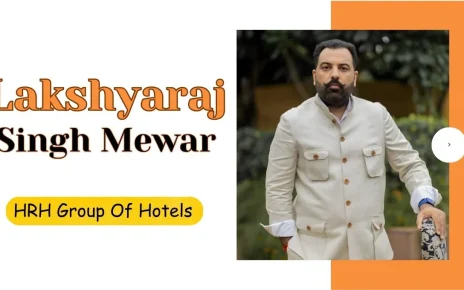
Lakshyaraj Singh Mewar is a man whose story that is a blend of history, heritage, modern business and social objective. Being born to one of the oldest royal families in India, he made not only the decision to keep up with the past, but also create the continuation, which would respect the tradition, yet would […]
Startup India
The entrepreneurial scenario in India has changed over the last decade. The Indian government is supporting innovation through its Startup India initiative, creating employment opportunities and accelerating economic growth. In this blog, let's discuss Startup India, including its objectives, benefits, and eligibility criteria; also, know how to get a startup registered under this initiative.
What is Startups ?
A startup is the early stage of a company that is formed to develop a unique product or service, introduce it into the market, and scale it to make substantial revenues. Startups are an important part of innovation, job creation, and diversification in the economy. In India, startups play a critical role in driving technology adoption and solving complex challenges in areas such as healthcare, education, and financial inclusion.
Characteristics of a Startup
Innovation: Key concentration in developing new products, services, or processes.
Scalability: Ability to grow rapidly with low incremental costs.
Disruption: Challenge traditional business models or industries.
Importance of Startups in India
Job Creation: Startups are significant employment generators.
Economic Growth: Contribute to GDP by introducing new industries.
Technological Advancement: Drive innovation and technology adoption.
What is the Startup India Initiative?
Startup India is one of the flagship initiatives of the Government of India, launched on January 16, 2016. It aims to build a robust ecosystem that nurtures innovation and startups across the country. The idea is to give an impetus to economic growth and employment generation in a substantial way. Startup India seeks to encourage entrepreneurship by giving a boost to innovation and design, thus leading to the growth and success of the startup ecosystem.
Standup India Scheme Standup India scheme was announced on April 5, 2016, to finance new enterprises, to boost the entrepreneurship culture in India. The program ensures the availability of loans through the Scheduled Commercial Banks (SCBs), between ₹10 lakh and ₹1 crore to at least one member of the Scheduled Caste (SC) and Scheduled Tribe (ST), and at least one woman, per bank branch. The support in this new scheme is granted to businesses in the trading, services, or manufacturing sectors. This will supposedly help about 250,000 borrowers.
Key Objectives of Startup India
Making Business Easier: Simple rules, compliance, and legal steps.
Financial Help: Provide access to government funds and venture capital.
Building Skills: Offer training and mentorship programs.
Encouraging Innovation: Support research and development with grants.
Features of Startup India
Startup India Hub: This is a place where startups can connect with investors and mentors.
Fund of Funds for Startups (FFS): This is a ₹10,000 crore fund managed by the Small Industries Development Bank of India (SIDBI).
Tax Benefits: Eligible startups can get exemptions from income tax and capital gains tax.
Startup Recognition: Startups can receive official recognition from the Department for Promotion of Industry and Internal Trade (DPIIT).
The Startup India scheme eligibility criteria
If you want to get funding through the Start-up India scheme, you need to meet certain eligibility requirements. Knowing these requirements well will help you successfully go through the application process.
Business Experience: Start-ups applying for this scheme must have been operating for more than five years.
Age Requirement: Applicants must be at least 18 years old.
Company Structure: To get funds under this scheme, the company must be either a partnership or a private limited company.
Turnover Limit: The company should have an annual turnover of no more than Rs. 25 crore.
No Reconstruction: Start-ups that have emerged from the splitting or restructuring of an existing business are not eligible for this scheme. Companies that have divided an organization into two or more parts will be disqualified.
If a company is developing a new product or service, it can benefit from the Start-up India policy.
Here are the requirements:
The start-up must create, utilize, or sell a product or service that is based on new technology or intellectual property.
The focus should be on enhancing an existing product or developing a new one that adds value for customers or improves workflow.
The start-up must not engage in projects that are not unique or do not provide value to customers or enhance workflow.
To get a Startup India loan, start-ups must secure various approvals and submit specific documents:
Obtain approval from the Inter-Ministerial Board under the Department of Industrial Policy and Promotion (DIPP).
Acquire a recommendation from an incubator affiliated with a recognized post-graduate college.
Secure a recommendation from a government-recognized incubator.
File a patent for your product or service and have it published in the Indian Patent Office Journals.
If your services involve funding and equity, register with the Securities and Exchange Board of India (SEBI).
Provide a funding letter from any state or central government scheme that supports innovation.
How to Register Under Startup Under Startup India Scheme?
Step 1: Start Your Business
The first step in starting your business is to choose a legal structure, such as a Private Limited Company, Partnership, or Limited Liability Partnership (LLP). You will need to complete the standard registration process, which involves submitting an application and obtaining a Certificate of Incorporation or Partnership registration.
Step 2: Register with Startup India
Once you have created your business, the next step is to register it as a startup. This process is straightforward and can be completed online. First, visit the Startup India website and click the 'Register' button. Enter your name, email address, and mobile number, then create a password and click 'Register.' You will receive a One-Time Password (OTP) in your email. Enter this OTP and provide additional information, such as your user type, business name, and the stage of your startup. Finally, click 'Submit' to create your Startup India profile. Completing this registration will help your business be recognized as a startup under the Startup India scheme, granting you access to various benefits and support.
Step 3: Obtain DPIIT Recognition
After creating your profile on the Startup India website, the next step is obtaining recognition from the Department for Promotion of Industry and Internal Trade (DPIIT). This recognition provides benefits such as quality intellectual property services, relaxed public procurement rules, self-certification for labour and environmental laws, simplified winding-up procedures, access to the Fund of Funds, and tax exemptions for three years.
Step 4: Submit the Documents for Registration
To complete the registration process and obtain DPIIT recognition for your startup, please submit the following documents:
1. The incorporation or registration certificate of your startup.
2. Proof of funding, if applicable.
3. An authorization letter from the company's authorized representative
4. Evidence of your concept, such as a website link, pitch deck, or video (this applies to startups at the validation, early traction, or scaling stage).
5. Information regarding any patents and trademarks you hold.
6. A list of any awards or certificates of recognition you have received.
7. Your Permanent Account Number (PAN).
Step 5: Self-Certification of Eligibility Conditions
You need to confirm that your business meets the following conditions:
1. Your business must be a Private Limited Company, Limited Liability Partnership (LLP), or partnership firm.
2. Your business has been registered in India for no more than five years.
3. Your company's turnover does not exceed ₹100 crore.
4. Your company is consistently innovating or improving existing systems.
5. Your business is based on an original idea, rather than a split or reorganization of an existing business.
Step 6: Obtain Your Recognition Number
When applying for registration, you will receive your recognition number immediately. The authority will send you the certificate of registration or incorporation after reviewing your uploaded documents. Ensure that you upload accurate information to avoid errors, as mistakes can lead to fines of up to 50% of your paid-up capital or a minimum of Rs. 25,000. By fulfilling the eligibility and registration requirements, your company can participate in the Startup India scheme and enjoy various benefits provided by the government.
Wrapping Up
The Startup India initiative has revolutionized the entrepreneurial landscape in India by offering financial, regulatory, and infrastructural support. If you’re an entrepreneur with an innovative idea, registering under this program can unlock numerous opportunities for growth and success. Begin your startup journey today and contribute to India’s transformation into a global hub for innovation.
FAQ’s
Q1. What is the aim of the Startup India initiative?
Ans: Startup India aims to promote entrepreneurship, support innovation, and create a robust startup ecosystem in India.
Q2. How long does it take to register under Startup India?
Ans: The registration process typically takes 2–3 weeks, depending on document verification.
Q3. Are there any fees for registering under Startup India?
Ans: No, the registration process under the Startup India initiative is free of cost.
Q4. Can a sole proprietorship register under Startup India?
Ans: No, only Private Limited Companies, LLPs, and Partnership Firms are eligible to register.
Q5. What are the tax benefits available to startups?
Ans: Startups can avail of income tax exemptions for three consecutive years and exemptions on long-term capital gains.
Q6. Is the Startup India initiative open to foreign startups?
Ans: No, the initiative is exclusively for startups registered and operating in India.