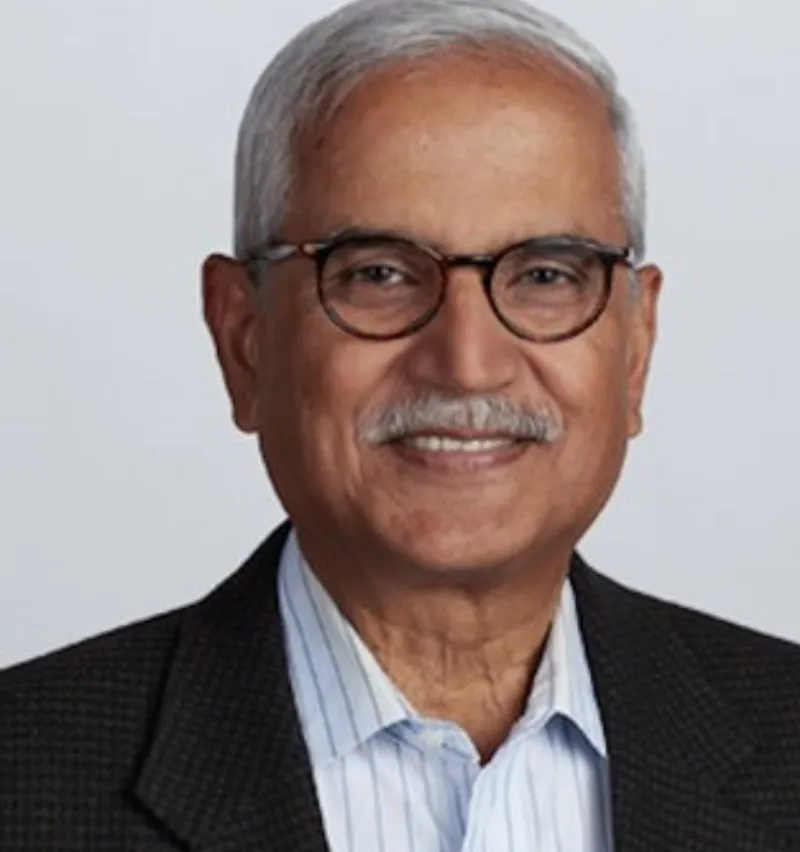
The name of Rakesh Gangwal can never be left out whenever people are talking about the success of the Indian aviation industry. He is one of the most significant founders of the IndiGo airlines that proceeded to become the largest airlines in India. Unlike many business leaders, he stayed away from fame and loud publicity. He believed more in planning, numbers, and training. The story of Rakesh is about learning, longanimity, teamwork, and long-term thinking. From studying engineering to building a world-class airline, his journey shows how calm decisions can create huge success.
Rakesh Gangwal was born on 25 July 1953 in Kolkata, West Bengal. He was born in a middle class family whereby education was highly valued. He was interested in numbers, systems as well as solving problems at a very young age. He is a quiet person and does not talk a lot. He likes to know how things operate. This habit later helped him manage complex airline operations smoothly.
Rakesh Gangwal Age
Rakesh Gangwal age is 72 years. Even after stepping away from active airline management, his business decisions and ideas continue to influence India’s aviation industry. In 2026, he is going to celebrate his 73rd birthday in July.
Rakesh Gangwal Education
The education contributed significantly to the career of Gangwal. He attended Don bosco School in Park Circus in Kolkata. He graduated in Mechanical Engineering at IIT Kanpur, which is considered to be one of the best engineering institutes in India. He went on to earn an MBA in the Wharton School, University of Pennsylvania. This good schooling background assisted him to comprehend both the systems used technically as well as the management of businesses. His education gave him the tools to plan airline operations with great detail and discipline.
Rakesh began his professional career in the aviation industry in the United States. He has worked in the reputable international airlines and was in the senior leadership positions. He has worked in firms such as United airlines, US airways as well as Worldspan Technologies. These positions taught him how to price, run and manage customers and control costs of an airline. As time went by, he was turned out to be the most admired aviation professionals in the world.
In 2005, Gangwal with Rahul Bhatia began IndiGo Airlines. Whereas Rahul Bhatia was concerned with the infrastructure and ownership, Gangwal was in charge of the airline strategy and operations. This partnership between Rahul Bhatia and Rakesh Gangwal proved powerful. They focused on low costs, on-time performance, simple services, and high aircraft usage.
IndiGo followed a single-aircraft model and avoided unnecessary expenses. Because of this, Rakesh Gangwal Indigo became a major success story. Within a few years, IndiGo became India’s largest airline by market share.
Rakesh Gangwal Challenges
Even with success, the journey had challenges. The airline business is hazardous and introduces high costs and the value of fuel prices frequently jumps. In addition, there was intense competition with other airlines and internal conflicts between the founders were later manifested.
Over time, differences between the founders led to governance disputes. Rakesh eventually reduced his active role and sold parts of his stake, that is done in May and June of 2025. He sold 3.4% shares of his stake in May and 5.7% shares of his stake in June. These kinds of steps were quite full of challenges; his contribution to building IndiGo remains historic.
Gangwal is a private person and keeps his personal life away from media attention. He is married to Shobha Gangwal. They have a daughter, Parul Gangwal. Other than that, there is no information about his extended family are publicly shared. He believes in maintaining a clear boundary between work and personal life.
Rakesh Gangwal Investments
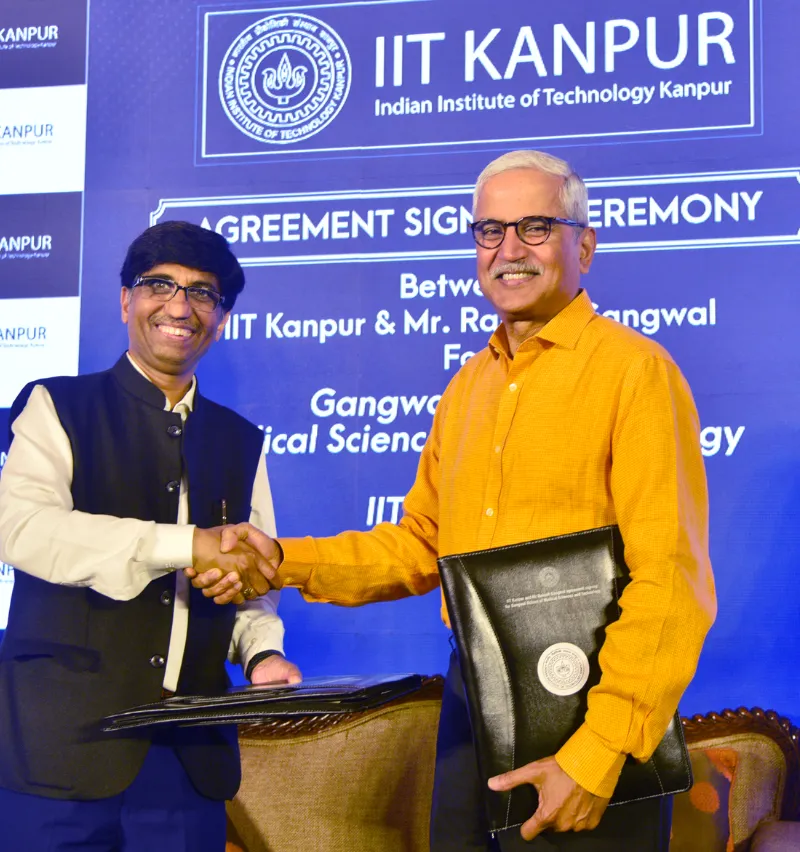
After stepping back from IndiGo, Rakesh focused on managing his wealth carefully. Investments he has made are the Equity holdings, long-term financial investments and donations. He has given away huge amounts of money to institutions of learning, including his own alma matter IIT Kanpur to promote learning and research. Rakesh has given a 100 Crore to the school of medical science and technology and this has been officially verified by Abhay Karandikar, director of IIT Kanpur.
Rakesh Gangwal Awards and Achievements
Rakesh’s awards and achievements speak loudly. His biggest achievement is proving that Indian airlines can succeed with discipline and clear planning.
Awards and Achievements
Information
Ranked 359th in 2020
In America’s 400 richest people list from Forbes
Ranked 29th
In Forbes’ prestigious list, with a net worth of $6.6 billion
America’s Richest Immigrants in 2025
One of the most influential Indian origin entrepreneurs who immigrant in America by Forbes
Co-founder of IndiGo Airlines
Built India’s largest low-cost airline
Aviation industry leader
Worked as President and CEO for US Airways Group and Worldspan Technologies
As of recent estimates, Rakesh Gangwal net worth is around $5.58 billion. His wealth mainly comes from his stake in IndiGo Airlines and long-term investments. Even after selling part of his share, he remains one of India’s wealthiest business leaders.
Year
Net Worth
2016
$1.90 billion
2017
$2.10 billion
2018
$3.30 billion
2019
$2.90 billion
2020
$2.40 billion
2021
$3.90 billion
2022
$4 billion
2023
$3.80 billion
2024
$5.96 billion
2025
$5.69 billion
2026
$5.58 billion
Rakesh Gangwal Social Media Presence
Gangwal does not maintain any active public social media accounts. He prefers privacy and believes that business results matter more than online presence.
Rakesh Gangwal Interesting Facts
He is an IIT Kanpur and Wharton alumnus
He built IndiGo using strict cost control
He avoids media attention
He prefers systems over personalities
He donates heavily to education
FAQs
Q1. Who is Rakesh Gangwal?
Ans. He is an Indian businessman and aviation expert who co-founded IndiGo Airlines.
Q2. What is Rakesh Gangwal net worth?
Ans. His net worth is estimated to be around $5.58 billion in 2026.
Q3. What is Rakesh Gangwal education background?
Ans. He studied engineering at IIT Kanpur and earned an MBA from the Wharton School.
Q4. What is the role of Rakesh Gangwal Indigo Airlines?
Ans. He was the co-founder and strategic leader behind IndiGo Airlines.
Q5. Who are Rahul Bhatia and Rakesh Gangwal?
Ans. The founders of IndiGo Airlines worked together to build India’s largest airline.
StartupStoryHub is a fast-growing digital platform dedicated to bringing the latest updates from the world of startups, innovation, technology, and business. Our mission is to empower entrepreneurs and readers with accurate, inspiring, and insightful stories that shape the future of entrepreneurship. Stay connected for daily startup news, funding stories, and trend analyses from across the globe.
🌐 Visit StartupStoryHub.com
| 🚀 Your daily dose of startup inspiration!
Prathap C. Reddy is one of the names of a person who led change in India in terms of medicine and care. A doctor by profession, healthcare leader at heart and a creator of one of the largest healthcare networks in Asia is what he is. His biography demonstrates that one person with a clear […]
Karsanbhai Patel is the top brass behind the name of Nirma. An indian detergent brand that became popular over time. He is counted among the top Indian entrepreneurs in 2026. Karsanbhai was professionally a lab technician who established his own detergent brand in 1969. He gave the name of this brand, ‘Nirma’, after the name […]
In a nation where no one dared speak about menstruation, let alone challenge the taboo, a single woman set out to redefine how young girls learn about their bodies. Founder of Menstrupedia, Aditi Gupta is a global social entrepreneur, illustrator, researcher, and leader in menstrual education. Her transformation from enduring menstrual stigma in her childhood, which impelled […]
Startup India
The entrepreneurial scenario in India has changed over the last decade. The Indian government is supporting innovation through its Startup India initiative, creating employment opportunities and accelerating economic growth. In this blog, let's discuss Startup India, including its objectives, benefits, and eligibility criteria; also, know how to get a startup registered under this initiative.
What is Startups ?
A startup is the early stage of a company that is formed to develop a unique product or service, introduce it into the market, and scale it to make substantial revenues. Startups are an important part of innovation, job creation, and diversification in the economy. In India, startups play a critical role in driving technology adoption and solving complex challenges in areas such as healthcare, education, and financial inclusion.
Characteristics of a Startup
Innovation: Key concentration in developing new products, services, or processes.
Scalability: Ability to grow rapidly with low incremental costs.
Disruption: Challenge traditional business models or industries.
Importance of Startups in India
Job Creation: Startups are significant employment generators.
Economic Growth: Contribute to GDP by introducing new industries.
Technological Advancement: Drive innovation and technology adoption.
What is the Startup India Initiative?
Startup India is one of the flagship initiatives of the Government of India, launched on January 16, 2016. It aims to build a robust ecosystem that nurtures innovation and startups across the country. The idea is to give an impetus to economic growth and employment generation in a substantial way. Startup India seeks to encourage entrepreneurship by giving a boost to innovation and design, thus leading to the growth and success of the startup ecosystem.
Standup India Scheme Standup India scheme was announced on April 5, 2016, to finance new enterprises, to boost the entrepreneurship culture in India. The program ensures the availability of loans through the Scheduled Commercial Banks (SCBs), between ₹10 lakh and ₹1 crore to at least one member of the Scheduled Caste (SC) and Scheduled Tribe (ST), and at least one woman, per bank branch. The support in this new scheme is granted to businesses in the trading, services, or manufacturing sectors. This will supposedly help about 250,000 borrowers.
Key Objectives of Startup India
Making Business Easier: Simple rules, compliance, and legal steps.
Financial Help: Provide access to government funds and venture capital.
Building Skills: Offer training and mentorship programs.
Encouraging Innovation: Support research and development with grants.
Features of Startup India
Startup India Hub: This is a place where startups can connect with investors and mentors.
Fund of Funds for Startups (FFS): This is a ₹10,000 crore fund managed by the Small Industries Development Bank of India (SIDBI).
Tax Benefits: Eligible startups can get exemptions from income tax and capital gains tax.
Startup Recognition: Startups can receive official recognition from the Department for Promotion of Industry and Internal Trade (DPIIT).
The Startup India scheme eligibility criteria
If you want to get funding through the Start-up India scheme, you need to meet certain eligibility requirements. Knowing these requirements well will help you successfully go through the application process.
Business Experience: Start-ups applying for this scheme must have been operating for more than five years.
Age Requirement: Applicants must be at least 18 years old.
Company Structure: To get funds under this scheme, the company must be either a partnership or a private limited company.
Turnover Limit: The company should have an annual turnover of no more than Rs. 25 crore.
No Reconstruction: Start-ups that have emerged from the splitting or restructuring of an existing business are not eligible for this scheme. Companies that have divided an organization into two or more parts will be disqualified.
If a company is developing a new product or service, it can benefit from the Start-up India policy.
Here are the requirements:
The start-up must create, utilize, or sell a product or service that is based on new technology or intellectual property.
The focus should be on enhancing an existing product or developing a new one that adds value for customers or improves workflow.
The start-up must not engage in projects that are not unique or do not provide value to customers or enhance workflow.
To get a Startup India loan, start-ups must secure various approvals and submit specific documents:
Obtain approval from the Inter-Ministerial Board under the Department of Industrial Policy and Promotion (DIPP).
Acquire a recommendation from an incubator affiliated with a recognized post-graduate college.
Secure a recommendation from a government-recognized incubator.
File a patent for your product or service and have it published in the Indian Patent Office Journals.
If your services involve funding and equity, register with the Securities and Exchange Board of India (SEBI).
Provide a funding letter from any state or central government scheme that supports innovation.
How to Register Under Startup Under Startup India Scheme?
Step 1: Start Your Business
The first step in starting your business is to choose a legal structure, such as a Private Limited Company, Partnership, or Limited Liability Partnership (LLP). You will need to complete the standard registration process, which involves submitting an application and obtaining a Certificate of Incorporation or Partnership registration.
Step 2: Register with Startup India
Once you have created your business, the next step is to register it as a startup. This process is straightforward and can be completed online. First, visit the Startup India website and click the 'Register' button. Enter your name, email address, and mobile number, then create a password and click 'Register.' You will receive a One-Time Password (OTP) in your email. Enter this OTP and provide additional information, such as your user type, business name, and the stage of your startup. Finally, click 'Submit' to create your Startup India profile. Completing this registration will help your business be recognized as a startup under the Startup India scheme, granting you access to various benefits and support.
Step 3: Obtain DPIIT Recognition
After creating your profile on the Startup India website, the next step is obtaining recognition from the Department for Promotion of Industry and Internal Trade (DPIIT). This recognition provides benefits such as quality intellectual property services, relaxed public procurement rules, self-certification for labour and environmental laws, simplified winding-up procedures, access to the Fund of Funds, and tax exemptions for three years.
Step 4: Submit the Documents for Registration
To complete the registration process and obtain DPIIT recognition for your startup, please submit the following documents:
1. The incorporation or registration certificate of your startup.
2. Proof of funding, if applicable.
3. An authorization letter from the company's authorized representative
4. Evidence of your concept, such as a website link, pitch deck, or video (this applies to startups at the validation, early traction, or scaling stage).
5. Information regarding any patents and trademarks you hold.
6. A list of any awards or certificates of recognition you have received.
7. Your Permanent Account Number (PAN).
Step 5: Self-Certification of Eligibility Conditions
You need to confirm that your business meets the following conditions:
1. Your business must be a Private Limited Company, Limited Liability Partnership (LLP), or partnership firm.
2. Your business has been registered in India for no more than five years.
3. Your company's turnover does not exceed ₹100 crore.
4. Your company is consistently innovating or improving existing systems.
5. Your business is based on an original idea, rather than a split or reorganization of an existing business.
Step 6: Obtain Your Recognition Number
When applying for registration, you will receive your recognition number immediately. The authority will send you the certificate of registration or incorporation after reviewing your uploaded documents. Ensure that you upload accurate information to avoid errors, as mistakes can lead to fines of up to 50% of your paid-up capital or a minimum of Rs. 25,000. By fulfilling the eligibility and registration requirements, your company can participate in the Startup India scheme and enjoy various benefits provided by the government.
Wrapping Up
The Startup India initiative has revolutionized the entrepreneurial landscape in India by offering financial, regulatory, and infrastructural support. If you’re an entrepreneur with an innovative idea, registering under this program can unlock numerous opportunities for growth and success. Begin your startup journey today and contribute to India’s transformation into a global hub for innovation.
FAQ’s
Q1. What is the aim of the Startup India initiative?
Ans: Startup India aims to promote entrepreneurship, support innovation, and create a robust startup ecosystem in India.
Q2. How long does it take to register under Startup India?
Ans: The registration process typically takes 2–3 weeks, depending on document verification.
Q3. Are there any fees for registering under Startup India?
Ans: No, the registration process under the Startup India initiative is free of cost.
Q4. Can a sole proprietorship register under Startup India?
Ans: No, only Private Limited Companies, LLPs, and Partnership Firms are eligible to register.
Q5. What are the tax benefits available to startups?
Ans: Startups can avail of income tax exemptions for three consecutive years and exemptions on long-term capital gains.
Q6. Is the Startup India initiative open to foreign startups?
Ans: No, the initiative is exclusively for startups registered and operating in India.