Corporate wellness is undergoing a quiet revolution—and for many HR leaders, it’s long overdue.
For years, organizations invested heavily in wellness programs: subsidized gym memberships, annual health screenings, and once-a-year fitness challenges. On paper, these initiatives looked impressive. In reality, participation was often low, engagement faded quickly, and measurable impact remained elusive.
Fast forward to 2026, and a new model is taking over: micro-competitions.
Short, dynamic, and highly engaging, these bite-sized challenges are redefining how companies think about employee wellbeing. And at the center of this shift is the rise of tools like a corporate step challenge app, designed to make participation effortless and fun.
Let’s explore why traditional wellness programs are losing ground—and why micro-competitions are winning.
The Decline of Traditional Wellness Programs
Traditional wellness programs weren’t built for how people work today.
Hybrid teams, shorter attention spans, and increasing workplace stress have exposed several flaws in the old model:
1. Low Sustained Engagement
Most programs rely on long-term commitment—8-week challenges, yearly goals, or ongoing tracking. The problem? Motivation drops off after the first 1–2 weeks.
2. One-Size-Fits-All Approach
Not everyone wants to run marathons or hit 10,000 steps daily. Traditional programs often exclude employees with different fitness levels, interests, or physical limitations.
3. Lack of Immediate Rewards
Humans are wired for quick feedback. Waiting weeks for results or recognition simply doesn’t work anymore.
4. Poor Integration Into Work Culture
Wellness was often treated as an “extra,” not embedded into daily workflows or team dynamics.
The result: low ROI, limited behavior change, and disengaged employees.
What Are Micro-Competitions?
Micro-competitions are short, focused wellness challenges designed to drive quick bursts of engagement.
Instead of a 3-month wellness program, think:
- A 5-day team step challenge
- A 7-day mindfulness streak
- A 10-day hydration or sleep challenge
They are:
- Time-bound (typically 3–14 days)
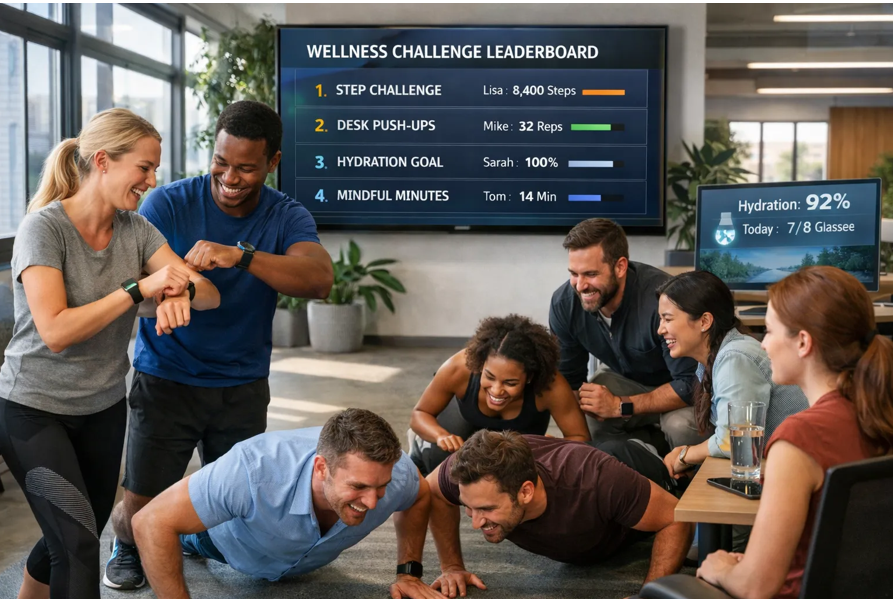
- Highly interactive (leaderboards, teams, social feeds)
- Inclusive (multiple activity options)
- Gamified (points, badges, rewards)
Most importantly, they meet employees where they are—physically, mentally, and culturally.
Why Micro-Competitions Work Better in 2026
1. They Align With Modern Attention Spans
In a world of short-form content and rapid feedback loops, long-term wellness programs feel outdated.
Micro-competitions tap into the same psychology that makes social media addictive:
- Quick wins
- Visible progress
- Frequent rewards
Employees are far more likely to commit to a 7-day workplace step challenge than a 90-day fitness plan.
2. They Create Momentum, Not Pressure
Traditional programs often feel like obligations. Micro-competitions feel like opportunities.
Because they’re short:
- Employees are more willing to try
- There’s less fear of failure
- Participation resets regularly
This creates a cycle of continuous re-engagement, rather than one big push followed by burnout.
3. They Foster Social Connection
Modern work can be isolating—especially in hybrid environments.
Micro-competitions bring people together through:
- Team-based challenges
- Shared goals
- Friendly competition
- Real-time interaction
This social layer is what transforms a simple step challenge app into a powerful engagement tool.
4. They Are More Inclusive by Design
Unlike traditional wellness programs, micro-competitions:
- Offer multiple activity types
- Reward effort, not just intensity
- Include low-impact options
This ensures participation across:
- Different fitness levels
- Age groups
- Physical abilities
Inclusivity isn’t just a “nice-to-have”—it’s essential for engagement.
5. They Deliver Measurable Results Quickly
HR leaders no longer have to wait months to evaluate impact.
Micro-competitions provide:
- Real-time participation data
- Immediate engagement metrics
- Quick feedback loops
This allows organizations to test, learn, and iterate rapidly.
The Data Behind Short-Form Engagement
The shift toward micro-engagement isn’t just anecdotal—it’s backed by broader workplace trends:
- Employees are 3–5x more likely to complete short-term challenges compared to long-term programs
- Gamified experiences increase participation rates by up to 60%
- Social accountability significantly boosts consistency and adherence
- Companies using digital wellness platforms report higher retention and satisfaction
Platforms like GoJoe have demonstrated how short, gamified challenges can outperform traditional models, with engagement rates reaching up to 90%—far above industry averages.
Real-World Examples of Micro-Competition Success
Global Consulting Firm
A multinational consulting company replaced its annual wellness initiative with monthly 7-day challenges.
Result:
- Participation increased from 22% to 78%
- Employees reported higher team connection across regions
Tech Startup (Hybrid Workforce)
A fast-growing startup introduced bi-weekly challenges using a company step challenge app.
Result:
- Improved onboarding experience for new hires
- Increased cross-team interaction
- Noticeable boost in morale during remote work periods
Healthcare Organization
A healthcare provider introduced inclusive challenges with low-impact activities.
Result:
- 2x increase in participation among previously inactive employees
- Reduced reported stress levels within weeks
How to Implement Micro-Competitions in Your Organization
Transitioning to micro-competitions doesn’t require a massive overhaul. It’s about designing smarter, more engaging experiences.
Here’s how to get started:
1. Start Small and Test Often
Launch with a simple 5–7 day challenge.
Examples:
- Step count challenge
- Hydration tracking
- Mindfulness minutes
Measure engagement and gather feedback before scaling.
2. Use the Right Technology
A modern corporate step challenge app is essential.
Look for platforms that offer:
- Real-time leaderboards
- Multi-activity tracking
- Social features (chat, feeds)
- Mobile-first experience
This reduces friction and boosts participation.
3. Focus on Team-Based Challenges
People are more motivated when they don’t want to let their team down.
Strategies:
- Create small teams (4–8 people)
- Mix departments to encourage networking
- Reward collective achievements
4. Keep It Inclusive
Design challenges that everyone can join.
Best practices:
- Include low-impact activities
- Offer flexible tracking options
- Use weighted scoring systems
Inclusivity = higher engagement.
5. Add Gamification Elements
Make it fun—not just functional.
Include:
- Points systems
- Badges and achievements
- Daily streaks
- Mini rewards
Gamification is what turns participation into habit.
6. Communicate Like a Marketing Campaign
Treat each challenge like a product launch.
Use:
- Teaser announcements
- Daily reminders
- Leaderboard updates
- Celebration posts
The more visible the challenge, the higher the engagement.
7. Leverage Data for Continuous Improvement
After each challenge:
- Analyze participation rates
- Identify drop-off points
- Gather employee feedback
Use insights to refine future challenges.
Spotlight: A Modern Approach to Micro-Competitions
Platforms like GoJoe are leading this shift by reimagining what a wellness program can be.
Instead of focusing solely on steps, they offer:
- 60+ activity types (from running to yoga to gardening)
- Gamified team challenges with live leaderboards
- Inclusive design that supports all fitness levels
- Social engagement features like chats and activity feeds
- Advanced analytics to track wellbeing impact
What sets this approach apart is the combination of:
- Short-term engagement (micro-competitions)
- Long-term behavior change (through repetition and variety)
Organizations using this model have reported:
- Higher participation rates
- Improved employee wellbeing within weeks
- Stronger workplace culture and connection
The Future of Corporate Wellness
The shift toward micro-competitions reflects a broader transformation in how we think about work and wellbeing.
In 2026 and beyond, successful wellness strategies will be:
- Flexible, not rigid
- Engaging, not obligatory
- Inclusive, not exclusive
- Data-driven, not assumption-based
And most importantly, they will be integrated into daily work life, not treated as a side initiative.
Key Takeaways
- Traditional wellness programs are declining due to low engagement and lack of flexibility
- Micro-competitions offer a modern, effective alternative with higher participation
- Short, gamified challenges align with today’s workplace dynamics
- A corporate step challenge app plays a critical role in enabling these experiences
- Inclusivity, social interaction, and real-time feedback are key success factors
- Companies adopting micro-challenges are seeing measurable improvements in engagement, wellbeing, and culture
Final Thoughts
Wellness at work is no longer about offering programs—it’s about creating experiences people actually want to join.
Micro-competitions succeed because they respect employees’ time, motivations, and diversity. They turn wellness from a checkbox into something dynamic, social, and genuinely enjoyable.
For HR leaders and business owners, the message is clear:
Think smaller, move faster, and engage smarter.