GDPR Coursesare becoming increasingly popular as organisations try to enhance how they protect their data. Since the General Data Protection Regulation went into force, businesses in the UK and all around Europe have had to rethink how they acquire, store, and utilise personal data. Understanding the GDPR Scope is the first step to following the rules. No matter how big or small your firm is, it’s important to know what your legal duties are. We use clear, helpful language in this blog to describe the rules, duties, and best practices.
To follow the General Data Protection Regulation, businesses need to know the basic rules, make sure everyone knows their duties, and put in place practical GDPR compliance mechanisms that consistently and effectively protect personal data. Below are the key rules, responsibilities, and best practices every organisation should understand to ensure compliance and build trust:
What is GDPR, and Why is it Important in 2026?
he GDPR is a law that keeps personal information safe. It became law in 2018. It protects people’s private information in the UK and the EU. Personal data includes things like names, email addresses, phone numbers, IP addresses, and other information. If you collect or use this kind of data, you have to obey the GDPR.
What does it mean? Not obeying the regulations could lead to large fines and damage to your reputation. It also builds trust. Customers want to know that their information is safe. Your business might be able to get ahead of the competition if it protects its data well.
Understanding GDPR Scope for UK and Global Businesses
Many people don’t realise how broad the GDPR Scope is. It doesn’t just apply to businesses in the UK or the EU. Companies who sell goods or services to people in the EU or the UK are likewise subject to this law, even if they are not based in those areas.
Under GDPR rules, there are two main roles:
Data controllers decide what to do with personal data and why.
Data processors work with data for controllers.
You are covered by the GDPR if your business keeps customer information, sends marketing emails, or utilises analytics tools. Even small enterprises have to follow the rules.
Important GDPR Rules You Can’t Ignore
The heart of GDPR compliance lies in seven key principles. These principles guide how personal data should be handled.
Lawfulness, fairness, and transparency
Purpose limitation
Data minimisation
Accuracy
Storage limitation
Integrity and confidentiality
Accountability
These rules say that you have to acquire data for good reasons. You should only get what you need. You need to maintain it safe and correct. Getting genuine consent is another key rule. Consent must be obvious and given freely. Not okay to have boxes already checked. Companies must also tell the government about significant data breaches in 72 hours. It is very important to act quickly while following GDPR rules.
GDPR Responsibilities: Who Does What?
To protect your data well, you need to know what your duties are. Data Controllers are responsible for making sure that personal data is handled in a legal way. They also need to show that they are following the rules. This is what it means to be accountable. The controller’s orders must be followed by data processors. They have to keep data safe and tell controllers when there are breaches.
Some businesses have to hire a Data Protection Officer. This usually applies to corporations or government agencies that handle a lot of private information. Team can better grasp their roles when there are clear internal rules. Regular audits and risk assessments also help make sure that the GDPR is followed.
Practical Best Practices for GDPR Compliance
Following the rules isn’t something you do once. It is a process that keeps going. Here are some things you can do today that will help.
Do a data audit to find out what information you have.
Make sure your privacy policy is clear by updating it.
Put in place strong security measures for your computer.
Teach employees the basics of data protection
Make a clear plan for what to do if there is a data breach.
Using secure passwords and encryption adds another layer of protection. Limiting access to sensitive data also reduces risk. Documentation is equally important. Keep records of processing activities. This demonstrates accountability under the General Data Protection Regulation.
Common GDPR Mistakes Businesses Still Make
Even though they’ve known about it for years, many businesses still have trouble following the GDPR. A typical error is to think that tiny firms don’t have to follow the rules. No, they are not. Another problem is privacy notices that aren’t clear.
These must make it clear how the data is used. Another issue is not getting rid of old data. Keeping information that isn’t needed makes you more vulnerable. Some companies, on the other hand, see compliance as a one-time exercise. GDPR rules say that you have to keep an eye on things and make them better all the time.
Why GDPR Courses Are Growing in Popularity?
More and more people want to take GDPR courses. Businesses seek advice that they can use. They want teams that know how hard it is to follow the rules in the real world. Training helps employees see risks. It also helps you make better choices when you handle personal data. Long-term compliance with the GDPR is supported by investing in structured learning. It makes it less likely that there will be violations and fines. More significantly, it makes customers trust you more.
Conclusion
Complying with GDPR is not just about avoiding penalties. It is about protecting individual rights and building lasting trust. When organisations clearly understand their responsibilities and apply best practices consistently, data protection becomes part of everyday business culture rather than a burden.
For professionals who want structured guidance and practical understanding, The Knowledge Academy, a trusted global training provider, offers comprehensive learning solutions that help organisations remain confident and compliant in today’s data-driven environment.
As per the Insurance Regulatory and Development Authority of India (IRDAI) 28 health insurance companies in India offer various health insurance plans to meet emergency health necessities each day. Finding the best health insurance company could be a daunting task for anyone. But the main question is why do you need health insurance? Choosing the […]
Dubai is a city where the old world coexists with the new luxurious world. The skyscrapers are glowing in the desert sky, and heritage is highly valued. When the two worlds collide in the dining experience, magic does take place. This magic is brought to life when there is an Arabic night theme in Palazzo […]
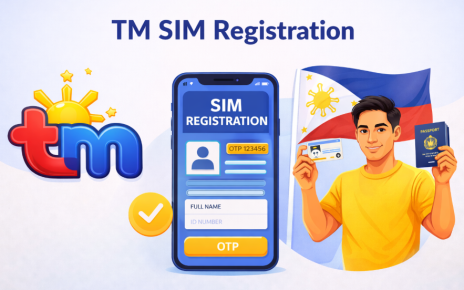
If you’re using a TM number in the Philippines, completing your SIM registration TM is not optional. Under the SIM Registration Act (RA 11934), every prepaid and postpaid SIM must be registered to stay active. If you delay the TM register process, your number can be deactivated. The good news? Registration takes only a few […]
The entrepreneurial scenario in India has changed over the last decade. The Indian government is supporting innovation through its Startup India initiative, creating employment opportunities and accelerating economic growth. In this blog, let's discuss Startup India, including its objectives, benefits, and eligibility criteria; also, know how to get a startup registered under this initiative.
What is Startups ?
A startup is the early stage of a company that is formed to develop a unique product or service, introduce it into the market, and scale it to make substantial revenues. Startups are an important part of innovation, job creation, and diversification in the economy. In India, startups play a critical role in driving technology adoption and solving complex challenges in areas such as healthcare, education, and financial inclusion.
Characteristics of a Startup
Innovation: Key concentration in developing new products, services, or processes.
Scalability: Ability to grow rapidly with low incremental costs.
Disruption: Challenge traditional business models or industries.
Importance of Startups in India
Job Creation: Startups are significant employment generators.
Economic Growth: Contribute to GDP by introducing new industries.
Technological Advancement: Drive innovation and technology adoption.
What is the Startup India Initiative?
Startup India is one of the flagship initiatives of the Government of India, launched on January 16, 2016. It aims to build a robust ecosystem that nurtures innovation and startups across the country. The idea is to give an impetus to economic growth and employment generation in a substantial way. Startup India seeks to encourage entrepreneurship by giving a boost to innovation and design, thus leading to the growth and success of the startup ecosystem.
Standup India Scheme Standup India scheme was announced on April 5, 2016, to finance new enterprises, to boost the entrepreneurship culture in India. The program ensures the availability of loans through the Scheduled Commercial Banks (SCBs), between ₹10 lakh and ₹1 crore to at least one member of the Scheduled Caste (SC) and Scheduled Tribe (ST), and at least one woman, per bank branch. The support in this new scheme is granted to businesses in the trading, services, or manufacturing sectors. This will supposedly help about 250,000 borrowers.
Key Objectives of Startup India
Making Business Easier: Simple rules, compliance, and legal steps.
Financial Help: Provide access to government funds and venture capital.
Building Skills: Offer training and mentorship programs.
Encouraging Innovation: Support research and development with grants.
Features of Startup India
Startup India Hub: This is a place where startups can connect with investors and mentors.
Fund of Funds for Startups (FFS): This is a ₹10,000 crore fund managed by the Small Industries Development Bank of India (SIDBI).
Tax Benefits: Eligible startups can get exemptions from income tax and capital gains tax.
Startup Recognition: Startups can receive official recognition from the Department for Promotion of Industry and Internal Trade (DPIIT).
The Startup India scheme eligibility criteria
If you want to get funding through the Start-up India scheme, you need to meet certain eligibility requirements. Knowing these requirements well will help you successfully go through the application process.
Business Experience: Start-ups applying for this scheme must have been operating for more than five years.
Age Requirement: Applicants must be at least 18 years old.
Company Structure: To get funds under this scheme, the company must be either a partnership or a private limited company.
Turnover Limit: The company should have an annual turnover of no more than Rs. 25 crore.
No Reconstruction: Start-ups that have emerged from the splitting or restructuring of an existing business are not eligible for this scheme. Companies that have divided an organization into two or more parts will be disqualified.
If a company is developing a new product or service, it can benefit from the Start-up India policy.
Here are the requirements:
The start-up must create, utilize, or sell a product or service that is based on new technology or intellectual property.
The focus should be on enhancing an existing product or developing a new one that adds value for customers or improves workflow.
The start-up must not engage in projects that are not unique or do not provide value to customers or enhance workflow.
To get a Startup India loan, start-ups must secure various approvals and submit specific documents:
Obtain approval from the Inter-Ministerial Board under the Department of Industrial Policy and Promotion (DIPP).
Acquire a recommendation from an incubator affiliated with a recognized post-graduate college.
Secure a recommendation from a government-recognized incubator.
File a patent for your product or service and have it published in the Indian Patent Office Journals.
If your services involve funding and equity, register with the Securities and Exchange Board of India (SEBI).
Provide a funding letter from any state or central government scheme that supports innovation.
How to Register Under Startup Under Startup India Scheme?
Step 1: Start Your Business
The first step in starting your business is to choose a legal structure, such as a Private Limited Company, Partnership, or Limited Liability Partnership (LLP). You will need to complete the standard registration process, which involves submitting an application and obtaining a Certificate of Incorporation or Partnership registration.
Step 2: Register with Startup India
Once you have created your business, the next step is to register it as a startup. This process is straightforward and can be completed online. First, visit the Startup India website and click the 'Register' button. Enter your name, email address, and mobile number, then create a password and click 'Register.' You will receive a One-Time Password (OTP) in your email. Enter this OTP and provide additional information, such as your user type, business name, and the stage of your startup. Finally, click 'Submit' to create your Startup India profile. Completing this registration will help your business be recognized as a startup under the Startup India scheme, granting you access to various benefits and support.
Step 3: Obtain DPIIT Recognition
After creating your profile on the Startup India website, the next step is obtaining recognition from the Department for Promotion of Industry and Internal Trade (DPIIT). This recognition provides benefits such as quality intellectual property services, relaxed public procurement rules, self-certification for labour and environmental laws, simplified winding-up procedures, access to the Fund of Funds, and tax exemptions for three years.
Step 4: Submit the Documents for Registration
To complete the registration process and obtain DPIIT recognition for your startup, please submit the following documents:
1. The incorporation or registration certificate of your startup.
2. Proof of funding, if applicable.
3. An authorization letter from the company's authorized representative
4. Evidence of your concept, such as a website link, pitch deck, or video (this applies to startups at the validation, early traction, or scaling stage).
5. Information regarding any patents and trademarks you hold.
6. A list of any awards or certificates of recognition you have received.
7. Your Permanent Account Number (PAN).
Step 5: Self-Certification of Eligibility Conditions
You need to confirm that your business meets the following conditions:
1. Your business must be a Private Limited Company, Limited Liability Partnership (LLP), or partnership firm.
2. Your business has been registered in India for no more than five years.
3. Your company's turnover does not exceed ₹100 crore.
4. Your company is consistently innovating or improving existing systems.
5. Your business is based on an original idea, rather than a split or reorganization of an existing business.
Step 6: Obtain Your Recognition Number
When applying for registration, you will receive your recognition number immediately. The authority will send you the certificate of registration or incorporation after reviewing your uploaded documents. Ensure that you upload accurate information to avoid errors, as mistakes can lead to fines of up to 50% of your paid-up capital or a minimum of Rs. 25,000. By fulfilling the eligibility and registration requirements, your company can participate in the Startup India scheme and enjoy various benefits provided by the government.
Wrapping Up
The Startup India initiative has revolutionized the entrepreneurial landscape in India by offering financial, regulatory, and infrastructural support. If you’re an entrepreneur with an innovative idea, registering under this program can unlock numerous opportunities for growth and success. Begin your startup journey today and contribute to India’s transformation into a global hub for innovation.
FAQ’s
Q1. What is the aim of the Startup India initiative?
Ans: Startup India aims to promote entrepreneurship, support innovation, and create a robust startup ecosystem in India.
Q2. How long does it take to register under Startup India?
Ans: The registration process typically takes 2–3 weeks, depending on document verification.
Q3. Are there any fees for registering under Startup India?
Ans: No, the registration process under the Startup India initiative is free of cost.
Q4. Can a sole proprietorship register under Startup India?
Ans: No, only Private Limited Companies, LLPs, and Partnership Firms are eligible to register.
Q5. What are the tax benefits available to startups?
Ans: Startups can avail of income tax exemptions for three consecutive years and exemptions on long-term capital gains.
Q6. Is the Startup India initiative open to foreign startups?
Ans: No, the initiative is exclusively for startups registered and operating in India.