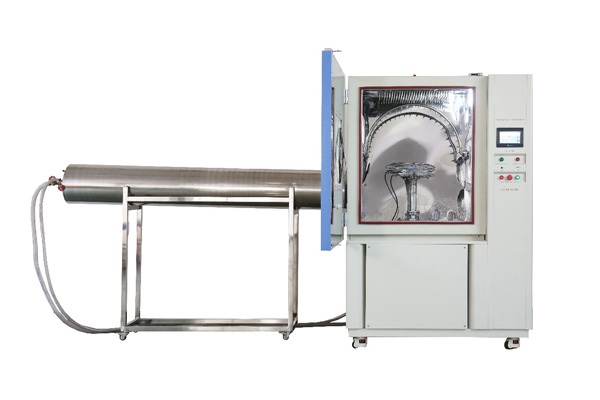
Products designed for outdoor or moisture exposed use must perform reliably when water contacts their surface. Even a minor leak can affect the safety function and durability. This makes controlled water exposure testing a vital step before any product reaches the market. Manufacturers rely on structured evaluation methods to confirm that protective enclosures prevent water entry under different conditions.
A rain test chamber serves as a controlled system that recreates water exposure patterns in a repeatable way. Instead of relying on uncertain real-world conditions, engineers can apply consistent water flow pressure and duration. This approach supports quality assurance and helps teams detect design weaknesses early. As industries demand longer product life and dependable protection, the role of such testing systems continues to grow.
Understanding how these chambers perform and why they count helps higher choices throughout design validation and compliance assessments. From fundamental splash publicity to intense water spray simulations, these systems provide clarity about how a product reacts while moisture is present.
How Does a Rain Test Chamber Function?
A rain test chamber is a sealed enclosure that applies controlled water flow onto a product surface. It evaluates resistance against moisture entry through joint seals or openings. The setup allows testers to adjust spray angles, intensity, and exposure time based on protection requirements. During controlled testing cycles, engineers observe water behavior and identify weak zones.
Within quality labs, these chambers are often used alongside inspection tools to record seepage or internal dampness. Many setups integrate test machinerain as part of broader verification processes where repeatability and accuracy are essential. The primary aim remains consistent evaluation without environmental variation.
What are the Primary Components of an Environmental Water Test System?
A rain test chamber includes multiple parts that work together to ensure accurate testing. Each element plays a specific role in creating controlled water exposure.
Adjustable Spray Nozzles: Distribute water evenly with variable flow intensity.
Water Circulation System: Maintains steady pressure for long-duration cycles.
Digital Control Panel: Allows operators to define specific angles, flow rates, and duration.
Filtration & Collection Basin: Gathers used water to support sustainable reuse and filtration.
Sealed Testing Enclosure: Prevents external interference during active verification.
Understanding Ingress Protection (IP) and Waterproofing Standards
Rain test chambers are commonly used to verify protection levels defined by ingress rating systems. These standards outline how much water exposure a product can resist without failure. Each test level defines conditions such as spray angle, volume, and duration.
By following these frameworks, manufacturers make certain consistency across different manufacturing batches. Standards additionally permit customers and regulators to examine products the use of uniform standards. Testing below recognized suggestions builds confidence and decreases the risk of unexpected failure after deployment.
Common Industrial Applications for Rain Test Chambers
Rain test chambers serve many industries where moisture resistance affects performance and safety. Their controlled environment allows repeated testing across different product categories.
Electronics: Evaluating internal moisture protection for sensitive hardware.
Outdoor Lighting: Confirming seal integrity during prolonged aquatic contact.
Housings & Enclosures: Testing rainfall durability for outdoor equipment.
Interface Panels: Validating protection around switches and electrical openings.
Industrial Casings: Maintaining functionality in wet operating scenarios.
The Step-by-Step Waterproofing Verification Process
Waterproofing verification involves more than a single exposure cycle. Products are placed inside the chamber and aligned based on expected usage orientation. Water is then applied according to selected parameters while internal sensors or visual inspections monitor intrusion.
After testing, components are examined for moisture traces, corrosion, or functional issues. Findings guide design improvements such as seal reinforcement or material changes. This structured approach helps manufacturers refine products before large scale production.
What are the Strategic Advantages of Standardized Rain Testing?
Using a rain test chamber offers practical benefits that support both quality and compliance goals. These advantages extend beyond simple water exposure checks.
Consistency: Controlled conditions ensure uniform results across testing batches.
Cost Reduction: Early leak detection prevents expensive late-stage redesigns.
Claim Verification: Repeatable tests improve confidence in marketing “waterproof” claims.
Certification Support: Alignment with global standards facilitates faster market entry.
Resource Efficiency: Eliminates the need for unpredictable outdoor field testing.
Best Practices for Maintenance and Calibration
Proper maintenance of a rain test chamber guarantees correct results over time. Regular inspection of spray nozzles prevents clogging that could affect water distribution. Water quality tests help prevent residue buildup that could alter check outcomes.
Calibration of waft controls and timers keeps publicity levels specific. Cleaning inner surfaces keeps an impartial surroundings free from contaminants. Consistent protection helps long-term reliability and testing integrity.
Conclusion: The Long-Term Value of Smart Waterproofing Tests
Rain test chambers play a critical role in confirming product readiness for moisture exposure scenarios. They offer controlled insight that supports stronger design decisions and dependable protection performance. When used correctly, these systems reduce uncertainty and enhance overall product quality.
By applying structured evaluation methods, manufacturers gain clarity on how designs respond to water contact under defined conditions. Integrating a reliable rain test chamberrain within quality workflows ensures that waterproofing efforts align with performance expectations and long-term reliability goals.
According to the Times of India, recent technological advancements have transformed how people consume and learn from education in India, especially in the post-pandemic era. The Indian e-learning sector is emerging as one of the largest in the world. Recently the Edtech sector has gained tremendous financial success and recognition across the country through their […]
The internet is full of websites that promise information, tools, downloads, tricks, or instant upgrades. One name you may have seen lately on social media or search results is infodost com. Some of them describe it as a place where you can just get quick facts, daily updates, or solutions to everyday problems. Others doubt […]
Key Takeaways: Are you constructing your dream home or renovating your existing space? If so, the choice of doors and windows matters a lot. When it comes to enhancing aesthetics, energy efficiency, and durability, uPVC doors are undoubtedly the best choice. As a matter of fact, their market size is likely to reach about USD […]
The entrepreneurial scenario in India has changed over the last decade. The Indian government is supporting innovation through its Startup India initiative, creating employment opportunities and accelerating economic growth. In this blog, let's discuss Startup India, including its objectives, benefits, and eligibility criteria; also, know how to get a startup registered under this initiative.
What is Startups ?
A startup is the early stage of a company that is formed to develop a unique product or service, introduce it into the market, and scale it to make substantial revenues. Startups are an important part of innovation, job creation, and diversification in the economy. In India, startups play a critical role in driving technology adoption and solving complex challenges in areas such as healthcare, education, and financial inclusion.
Characteristics of a Startup
Innovation: Key concentration in developing new products, services, or processes.
Scalability: Ability to grow rapidly with low incremental costs.
Disruption: Challenge traditional business models or industries.
Importance of Startups in India
Job Creation: Startups are significant employment generators.
Economic Growth: Contribute to GDP by introducing new industries.
Technological Advancement: Drive innovation and technology adoption.
What is the Startup India Initiative?
Startup India is one of the flagship initiatives of the Government of India, launched on January 16, 2016. It aims to build a robust ecosystem that nurtures innovation and startups across the country. The idea is to give an impetus to economic growth and employment generation in a substantial way. Startup India seeks to encourage entrepreneurship by giving a boost to innovation and design, thus leading to the growth and success of the startup ecosystem.
Standup India Scheme Standup India scheme was announced on April 5, 2016, to finance new enterprises, to boost the entrepreneurship culture in India. The program ensures the availability of loans through the Scheduled Commercial Banks (SCBs), between ₹10 lakh and ₹1 crore to at least one member of the Scheduled Caste (SC) and Scheduled Tribe (ST), and at least one woman, per bank branch. The support in this new scheme is granted to businesses in the trading, services, or manufacturing sectors. This will supposedly help about 250,000 borrowers.
Key Objectives of Startup India
Making Business Easier: Simple rules, compliance, and legal steps.
Financial Help: Provide access to government funds and venture capital.
Building Skills: Offer training and mentorship programs.
Encouraging Innovation: Support research and development with grants.
Features of Startup India
Startup India Hub: This is a place where startups can connect with investors and mentors.
Fund of Funds for Startups (FFS): This is a ₹10,000 crore fund managed by the Small Industries Development Bank of India (SIDBI).
Tax Benefits: Eligible startups can get exemptions from income tax and capital gains tax.
Startup Recognition: Startups can receive official recognition from the Department for Promotion of Industry and Internal Trade (DPIIT).
The Startup India scheme eligibility criteria
If you want to get funding through the Start-up India scheme, you need to meet certain eligibility requirements. Knowing these requirements well will help you successfully go through the application process.
Business Experience: Start-ups applying for this scheme must have been operating for more than five years.
Age Requirement: Applicants must be at least 18 years old.
Company Structure: To get funds under this scheme, the company must be either a partnership or a private limited company.
Turnover Limit: The company should have an annual turnover of no more than Rs. 25 crore.
No Reconstruction: Start-ups that have emerged from the splitting or restructuring of an existing business are not eligible for this scheme. Companies that have divided an organization into two or more parts will be disqualified.
If a company is developing a new product or service, it can benefit from the Start-up India policy.
Here are the requirements:
The start-up must create, utilize, or sell a product or service that is based on new technology or intellectual property.
The focus should be on enhancing an existing product or developing a new one that adds value for customers or improves workflow.
The start-up must not engage in projects that are not unique or do not provide value to customers or enhance workflow.
To get a Startup India loan, start-ups must secure various approvals and submit specific documents:
Obtain approval from the Inter-Ministerial Board under the Department of Industrial Policy and Promotion (DIPP).
Acquire a recommendation from an incubator affiliated with a recognized post-graduate college.
Secure a recommendation from a government-recognized incubator.
File a patent for your product or service and have it published in the Indian Patent Office Journals.
If your services involve funding and equity, register with the Securities and Exchange Board of India (SEBI).
Provide a funding letter from any state or central government scheme that supports innovation.
How to Register Under Startup Under Startup India Scheme?
Step 1: Start Your Business
The first step in starting your business is to choose a legal structure, such as a Private Limited Company, Partnership, or Limited Liability Partnership (LLP). You will need to complete the standard registration process, which involves submitting an application and obtaining a Certificate of Incorporation or Partnership registration.
Step 2: Register with Startup India
Once you have created your business, the next step is to register it as a startup. This process is straightforward and can be completed online. First, visit the Startup India website and click the 'Register' button. Enter your name, email address, and mobile number, then create a password and click 'Register.' You will receive a One-Time Password (OTP) in your email. Enter this OTP and provide additional information, such as your user type, business name, and the stage of your startup. Finally, click 'Submit' to create your Startup India profile. Completing this registration will help your business be recognized as a startup under the Startup India scheme, granting you access to various benefits and support.
Step 3: Obtain DPIIT Recognition
After creating your profile on the Startup India website, the next step is obtaining recognition from the Department for Promotion of Industry and Internal Trade (DPIIT). This recognition provides benefits such as quality intellectual property services, relaxed public procurement rules, self-certification for labour and environmental laws, simplified winding-up procedures, access to the Fund of Funds, and tax exemptions for three years.
Step 4: Submit the Documents for Registration
To complete the registration process and obtain DPIIT recognition for your startup, please submit the following documents:
1. The incorporation or registration certificate of your startup.
2. Proof of funding, if applicable.
3. An authorization letter from the company's authorized representative
4. Evidence of your concept, such as a website link, pitch deck, or video (this applies to startups at the validation, early traction, or scaling stage).
5. Information regarding any patents and trademarks you hold.
6. A list of any awards or certificates of recognition you have received.
7. Your Permanent Account Number (PAN).
Step 5: Self-Certification of Eligibility Conditions
You need to confirm that your business meets the following conditions:
1. Your business must be a Private Limited Company, Limited Liability Partnership (LLP), or partnership firm.
2. Your business has been registered in India for no more than five years.
3. Your company's turnover does not exceed ₹100 crore.
4. Your company is consistently innovating or improving existing systems.
5. Your business is based on an original idea, rather than a split or reorganization of an existing business.
Step 6: Obtain Your Recognition Number
When applying for registration, you will receive your recognition number immediately. The authority will send you the certificate of registration or incorporation after reviewing your uploaded documents. Ensure that you upload accurate information to avoid errors, as mistakes can lead to fines of up to 50% of your paid-up capital or a minimum of Rs. 25,000. By fulfilling the eligibility and registration requirements, your company can participate in the Startup India scheme and enjoy various benefits provided by the government.
Wrapping Up
The Startup India initiative has revolutionized the entrepreneurial landscape in India by offering financial, regulatory, and infrastructural support. If you’re an entrepreneur with an innovative idea, registering under this program can unlock numerous opportunities for growth and success. Begin your startup journey today and contribute to India’s transformation into a global hub for innovation.
FAQ’s
Q1. What is the aim of the Startup India initiative?
Ans: Startup India aims to promote entrepreneurship, support innovation, and create a robust startup ecosystem in India.
Q2. How long does it take to register under Startup India?
Ans: The registration process typically takes 2–3 weeks, depending on document verification.
Q3. Are there any fees for registering under Startup India?
Ans: No, the registration process under the Startup India initiative is free of cost.
Q4. Can a sole proprietorship register under Startup India?
Ans: No, only Private Limited Companies, LLPs, and Partnership Firms are eligible to register.
Q5. What are the tax benefits available to startups?
Ans: Startups can avail of income tax exemptions for three consecutive years and exemptions on long-term capital gains.
Q6. Is the Startup India initiative open to foreign startups?
Ans: No, the initiative is exclusively for startups registered and operating in India.