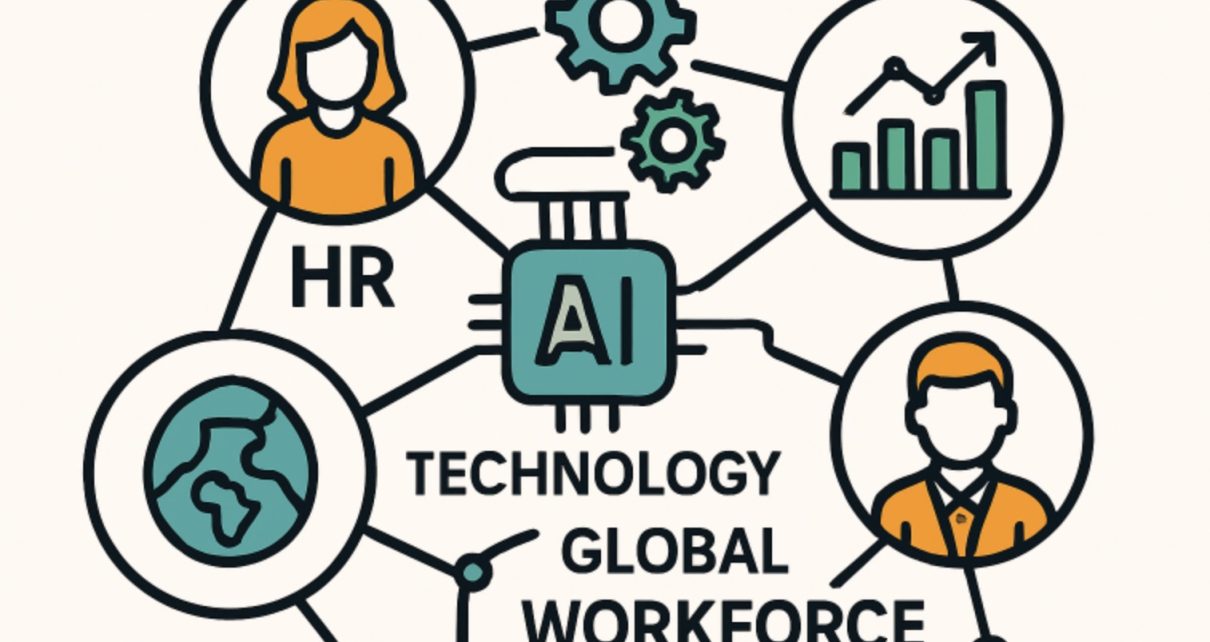
As the modern business environment becomes increasingly complex, many organizations are evaluating how outsourced HR services can help manage workforce challenges and advance strategic objectives. Rather than viewing HR outsourcing solely as a cost-cutting measure, businesses are now embracing it to gain access to specialized knowledge and technology, enabling them to navigate rapid workplace changes.
The era of digital transformation, remote work, and shifting employee expectations has pushed HR outsourcing into a new role: that of a collaborative business partner equipped to drive innovation and long-term success. The ability to leverage best-in-class HR practices while focusing on core business priorities is becoming a necessity for organizations looking to stay ahead of the curve.
The Strategic Evolution of HR Outsourcing
Previously, HR outsourcing focused on transactional functions such as payroll, benefits administration, and compliance management. This approach provided an opportunity to reduce overhead and improve process efficiency. However, as organizations seek to accelerate growth and remain agile amidst labor market disruptions and evolving regulations, the role of outsourced HR has shifted. Providers are increasingly being tapped to support everything from integrated talent management and leadership development to employer branding and workforce planning. HR outsourcing partners now work closely with leadership teams to align talent strategy with overall business objectives. This partnership is empowering organizations to reduce risk, improve compliance, and create positive, scalable employee experiences.
By unburdening internal teams from repetitive administrative work, companies can refocus attention on strategic initiatives that set them apart in the marketplace. As a result, outsourced HR providers are seen not only as cost savers but as valuable contributors to innovation and organizational success.
Integration of AI and Automation
Technological advancements, particularly artificial intelligence (AI) and automation, are redefining how HR functions are executed. AI-driven platforms can now power end-to-end recruiting by rapidly sorting resumes, scoring candidates, and even conducting initial screenings via chatbots. These tools help HR teams hire more efficiently and objectively, leveraging predictive analytics to assess not only qualifications but also cultural alignment. Additionally, automated platforms streamline common HR tasks such as time-off requests, benefits administration, and policy inquiries, freeing up HR professionals to focus on core business challenges. The ability to deploy predictive analytics extends beyond hiring to employee retention, engagement, and workforce planning, enabling businesses to address issues before they escalate. According to HR Dive, companies investing in HR tech report higher levels of productivity and satisfaction across their organizations.
Data-Driven Decision Making
The use of real-time data and advanced analytics in HR decision-making is quickly becoming mainstream. Modern HR outsourcing platforms can track a wide range of metrics, including employee performance, engagement scores, absenteeism, and wellness trends. This data informs leaders about which initiatives are most effective and where corrective actions are needed, offering insights that are impossible to obtain with traditional methods. Predictive analytics, in particular, enable proactive workforce management by identifying skills gaps, anticipating turnover, and flagging employees at risk of burnout. Personalized experiences made possible by this data foster deeper engagement and long-term loyalty.
Emphasis on Continuous Learning and Development
The rapid pace of technological change and automation is necessitating ongoing upskilling and reskilling. By 2025, industry reports estimate nearly half of all employees will require some form of reskilling. HR outsourcing agencies are playing a pivotal role in developing high-impact learning solutions accessible to both on-site and remote employees. These include digital training programs, mentorship initiatives, and micro-learning modules that can be tailored for specific industries or job functions. Learning and development are not just about technical proficiency but also about cultivating leadership skills and adaptability, which are critical for fostering innovation and staying competitive. Organizations that prioritize employee development are more likely to retain talent, promote from within, and build a culture of growth that resonates with today’s workforce.
Focus on Employee Engagement and Experience
Delivering positive employee experiences has become a central pillar of HR success. Outsourcing partners frequently implement platforms for pulse surveys, real-time feedback, and customized communication channels to ensure employees feel valued and heard. They also help design flexible benefits packages, foster inclusive remote work, and create programs that address well-being and resilience. High-performing organizations recognize that engaged employees drive productivity, customer satisfaction, and improved financial results. A recent Gallup study highlights the significant business impact of high engagement, further underscoring the case for investing in comprehensive engagement strategies.
Adapting to Remote and Hybrid Work Models
The forced shift to remote work during the COVID-19 pandemic has evolved into a long-term transformation. By 2025, it is projected that a significant share of the workforce will either work remotely or in a hybrid model. This dynamic presents new challenges around compliance, culture, engagement, and performance management, especially across geographically distributed teams. HR outsourcing providers are at the forefront of developing scalable policies, collaboration frameworks, and support systems to meet these challenges. Their expertise helps businesses remain agile, compliant, and supportive of employee well-being regardless of physical location.
Embracing Diversity, Equity, and Inclusion (DEI) Initiatives
A commitment to diversity, equity, and inclusion is now essential to attracting talent and fostering innovation. Outsourced HR partners are providing specialized DEI auditing, training, and strategy development to help organizations create truly inclusive cultures. These efforts span recruitment and onboarding through advancement and retention, ensuring equitable opportunities for all employees. Training modules educate teams about overcoming unconscious bias and building inclusive leadership skills, while data-driven analysis holds organizations accountable for progress. The outcome is a workplace where diversity is celebrated, resulting in higher engagement, creativity, and resilience in the face of change.
Conclusion
HR outsourcing has transformed from a cost-saving tool into a comprehensive strategy that empowers businesses to flourish in a continually evolving world of work. By integrating digital tools, leveraging data-based insight, and championing holistic employee experiences, HR outsourcing providers are partners in growth, not just service vendors. Organizations that strategically utilize outsourced HR will be uniquely positioned to adapt to future disruptions while cultivating a motivated, agile, and inclusive workforce.
Branding and marketing are no longer distinct functions working at different points of the customer journey. In a digital-first world, people form opinions about brands long before they interact with them. These opinions are determined by how brands appear, communicate, and respond across various digital touchpoints. This blog explores how creativity and technology come together […]
Introduction By 2025, creative teams will become quicker than ever. AI has become the foundation of the modern photo and video workflow, whether an individual creator or developer is creating media products, or a marketer is creating content daily. The problem, however, does not lie in locating AI tools, but rather in locating the correct […]
The value of a property is not based on the structure itself. What truly makes it valuable is the location where the structure stands. If you are looking for a property to purchase, invest in, or simply want to know how properties appreciate in value, read this article now. Accessibility for Time and Stress Savings […]
The entrepreneurial scenario in India has changed over the last decade. The Indian government is supporting innovation through its Startup India initiative, creating employment opportunities and accelerating economic growth. In this blog, let's discuss Startup India, including its objectives, benefits, and eligibility criteria; also, know how to get a startup registered under this initiative.
What is Startups ?
A startup is the early stage of a company that is formed to develop a unique product or service, introduce it into the market, and scale it to make substantial revenues. Startups are an important part of innovation, job creation, and diversification in the economy. In India, startups play a critical role in driving technology adoption and solving complex challenges in areas such as healthcare, education, and financial inclusion.
Characteristics of a Startup
Innovation: Key concentration in developing new products, services, or processes.
Scalability: Ability to grow rapidly with low incremental costs.
Disruption: Challenge traditional business models or industries.
Importance of Startups in India
Job Creation: Startups are significant employment generators.
Economic Growth: Contribute to GDP by introducing new industries.
Technological Advancement: Drive innovation and technology adoption.
What is the Startup India Initiative?
Startup India is one of the flagship initiatives of the Government of India, launched on January 16, 2016. It aims to build a robust ecosystem that nurtures innovation and startups across the country. The idea is to give an impetus to economic growth and employment generation in a substantial way. Startup India seeks to encourage entrepreneurship by giving a boost to innovation and design, thus leading to the growth and success of the startup ecosystem.
Standup India Scheme Standup India scheme was announced on April 5, 2016, to finance new enterprises, to boost the entrepreneurship culture in India. The program ensures the availability of loans through the Scheduled Commercial Banks (SCBs), between ₹10 lakh and ₹1 crore to at least one member of the Scheduled Caste (SC) and Scheduled Tribe (ST), and at least one woman, per bank branch. The support in this new scheme is granted to businesses in the trading, services, or manufacturing sectors. This will supposedly help about 250,000 borrowers.
Key Objectives of Startup India
Making Business Easier: Simple rules, compliance, and legal steps.
Financial Help: Provide access to government funds and venture capital.
Building Skills: Offer training and mentorship programs.
Encouraging Innovation: Support research and development with grants.
Features of Startup India
Startup India Hub: This is a place where startups can connect with investors and mentors.
Fund of Funds for Startups (FFS): This is a ₹10,000 crore fund managed by the Small Industries Development Bank of India (SIDBI).
Tax Benefits: Eligible startups can get exemptions from income tax and capital gains tax.
Startup Recognition: Startups can receive official recognition from the Department for Promotion of Industry and Internal Trade (DPIIT).
The Startup India scheme eligibility criteria
If you want to get funding through the Start-up India scheme, you need to meet certain eligibility requirements. Knowing these requirements well will help you successfully go through the application process.
Business Experience: Start-ups applying for this scheme must have been operating for more than five years.
Age Requirement: Applicants must be at least 18 years old.
Company Structure: To get funds under this scheme, the company must be either a partnership or a private limited company.
Turnover Limit: The company should have an annual turnover of no more than Rs. 25 crore.
No Reconstruction: Start-ups that have emerged from the splitting or restructuring of an existing business are not eligible for this scheme. Companies that have divided an organization into two or more parts will be disqualified.
If a company is developing a new product or service, it can benefit from the Start-up India policy.
Here are the requirements:
The start-up must create, utilize, or sell a product or service that is based on new technology or intellectual property.
The focus should be on enhancing an existing product or developing a new one that adds value for customers or improves workflow.
The start-up must not engage in projects that are not unique or do not provide value to customers or enhance workflow.
To get a Startup India loan, start-ups must secure various approvals and submit specific documents:
Obtain approval from the Inter-Ministerial Board under the Department of Industrial Policy and Promotion (DIPP).
Acquire a recommendation from an incubator affiliated with a recognized post-graduate college.
Secure a recommendation from a government-recognized incubator.
File a patent for your product or service and have it published in the Indian Patent Office Journals.
If your services involve funding and equity, register with the Securities and Exchange Board of India (SEBI).
Provide a funding letter from any state or central government scheme that supports innovation.
How to Register Under Startup Under Startup India Scheme?
Step 1: Start Your Business
The first step in starting your business is to choose a legal structure, such as a Private Limited Company, Partnership, or Limited Liability Partnership (LLP). You will need to complete the standard registration process, which involves submitting an application and obtaining a Certificate of Incorporation or Partnership registration.
Step 2: Register with Startup India
Once you have created your business, the next step is to register it as a startup. This process is straightforward and can be completed online. First, visit the Startup India website and click the 'Register' button. Enter your name, email address, and mobile number, then create a password and click 'Register.' You will receive a One-Time Password (OTP) in your email. Enter this OTP and provide additional information, such as your user type, business name, and the stage of your startup. Finally, click 'Submit' to create your Startup India profile. Completing this registration will help your business be recognized as a startup under the Startup India scheme, granting you access to various benefits and support.
Step 3: Obtain DPIIT Recognition
After creating your profile on the Startup India website, the next step is obtaining recognition from the Department for Promotion of Industry and Internal Trade (DPIIT). This recognition provides benefits such as quality intellectual property services, relaxed public procurement rules, self-certification for labour and environmental laws, simplified winding-up procedures, access to the Fund of Funds, and tax exemptions for three years.
Step 4: Submit the Documents for Registration
To complete the registration process and obtain DPIIT recognition for your startup, please submit the following documents:
1. The incorporation or registration certificate of your startup.
2. Proof of funding, if applicable.
3. An authorization letter from the company's authorized representative
4. Evidence of your concept, such as a website link, pitch deck, or video (this applies to startups at the validation, early traction, or scaling stage).
5. Information regarding any patents and trademarks you hold.
6. A list of any awards or certificates of recognition you have received.
7. Your Permanent Account Number (PAN).
Step 5: Self-Certification of Eligibility Conditions
You need to confirm that your business meets the following conditions:
1. Your business must be a Private Limited Company, Limited Liability Partnership (LLP), or partnership firm.
2. Your business has been registered in India for no more than five years.
3. Your company's turnover does not exceed ₹100 crore.
4. Your company is consistently innovating or improving existing systems.
5. Your business is based on an original idea, rather than a split or reorganization of an existing business.
Step 6: Obtain Your Recognition Number
When applying for registration, you will receive your recognition number immediately. The authority will send you the certificate of registration or incorporation after reviewing your uploaded documents. Ensure that you upload accurate information to avoid errors, as mistakes can lead to fines of up to 50% of your paid-up capital or a minimum of Rs. 25,000. By fulfilling the eligibility and registration requirements, your company can participate in the Startup India scheme and enjoy various benefits provided by the government.
Wrapping Up
The Startup India initiative has revolutionized the entrepreneurial landscape in India by offering financial, regulatory, and infrastructural support. If you’re an entrepreneur with an innovative idea, registering under this program can unlock numerous opportunities for growth and success. Begin your startup journey today and contribute to India’s transformation into a global hub for innovation.
FAQ’s
Q1. What is the aim of the Startup India initiative?
Ans: Startup India aims to promote entrepreneurship, support innovation, and create a robust startup ecosystem in India.
Q2. How long does it take to register under Startup India?
Ans: The registration process typically takes 2–3 weeks, depending on document verification.
Q3. Are there any fees for registering under Startup India?
Ans: No, the registration process under the Startup India initiative is free of cost.
Q4. Can a sole proprietorship register under Startup India?
Ans: No, only Private Limited Companies, LLPs, and Partnership Firms are eligible to register.
Q5. What are the tax benefits available to startups?
Ans: Startups can avail of income tax exemptions for three consecutive years and exemptions on long-term capital gains.
Q6. Is the Startup India initiative open to foreign startups?
Ans: No, the initiative is exclusively for startups registered and operating in India.